

An Essential Guide to Safe Medication Management
An Essential Guide to Safe Medication Management
An Essential Guide to Safe Medication Management
How Psychiatric Medication Management Supports Mental Health and Daily Life
Safe medication management is the ongoing, collaborative process of tracking, taking, and reviewing mental health medications so they work safely and effectively. Whether you take an antidepressant, anti-anxiety medication, mood stabilizer, ADHD medication, sleep support, or another prescribed treatment, a structured routine helps prevent missed doses, side effects, and unsafe medication changes.
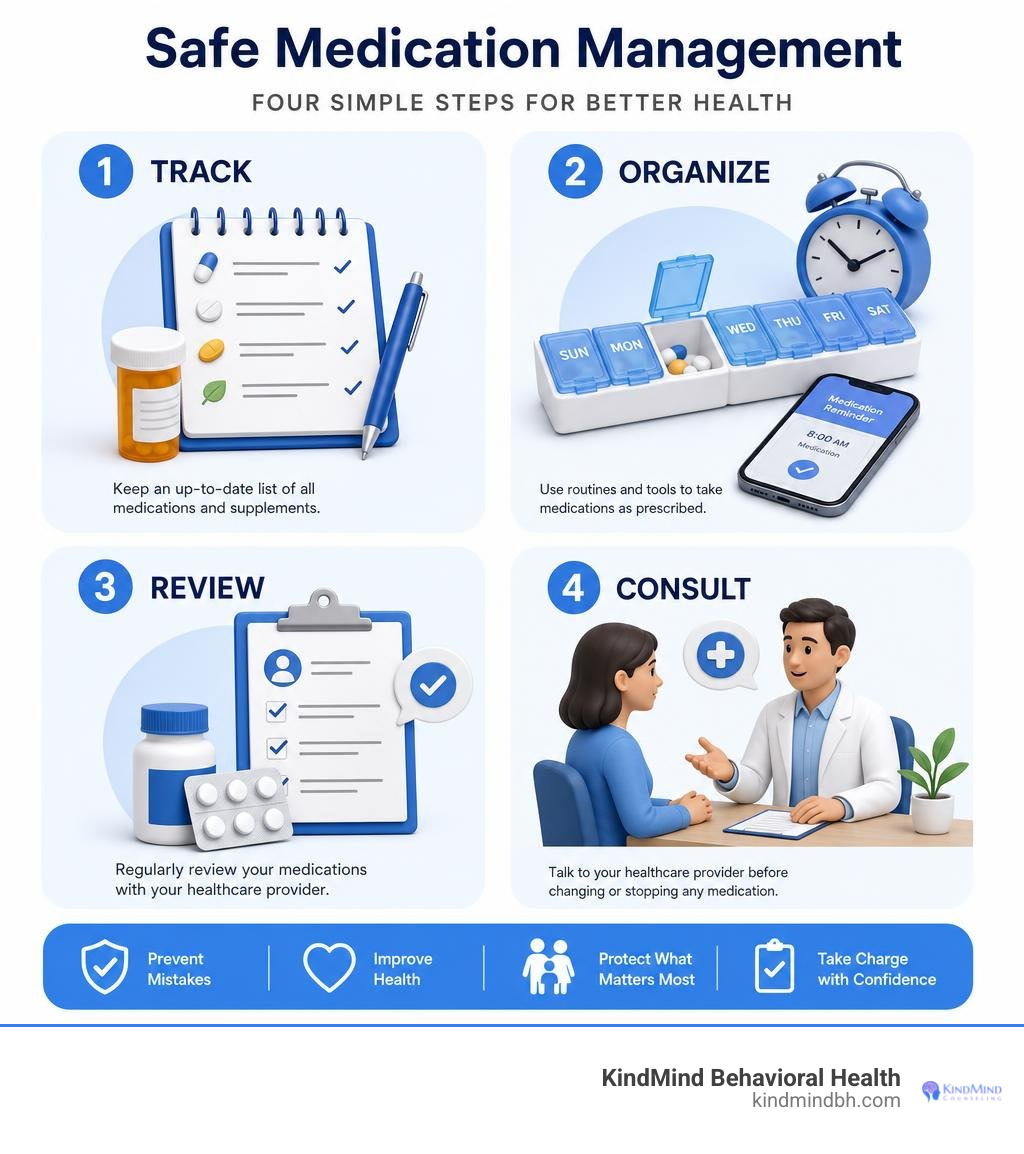
Here are four immediate steps to practice safe psychiatric medication management:
- Maintain a unified list: Write down every psychiatric prescription, medical medication, over-the-counter medicine, vitamin, and supplement you take, including exact dosages and instructions.
- Set up daily routines: Use a weekly pillbox, smartphone alarms, or medication tracking apps tied to daily habits like breakfast, bedtime, or brushing your teeth.
- Use one pharmacy when possible: Fill prescriptions through a consistent pharmacy so your pharmacist can help screen for interactions between psychiatric medications and other treatments.
- Communicate before changing doses: Never stop, skip, or adjust psychiatric medication on your own—even if you feel better or dislike a side effect—without consulting your prescriber.
At KindMind Behavioral Health, our team helps individuals navigate integrated mental healthcare and psychiatric medication management with compassion, clinical oversight, and practical support. Below, we walk through the essential tools, safety steps, and care-team strategies that help you manage mental health prescriptions with confidence.
What Is Psychiatric Medication Management and Why Is It Essential?
Psychiatric medications can be powerful tools for treating anxiety, depression, bipolar disorder, ADHD, trauma-related symptoms, sleep disruption, and other mental health concerns, but they are not one-size-fits-all solutions that run on autopilot. They require thoughtful selection, careful dosing, follow-up conversations, and ongoing safety monitoring.
Comprehensive psychiatric medication management provides an intentional, person-centered framework designed to optimize treatment. Following clear clinical medication management guidance helps ensure each medication is medically appropriate, effective for the intended symptoms, safe alongside other treatments, and taken as intended.
A central element of this process is recognizing why medication instructions matter and understanding drug interactions. Even over-the-counter pain relievers, herbal remedies, alcohol, cannabis, caffeine, and everyday foods can affect sleep, mood, concentration, or how your body processes prescription therapies.
Preventing Side Effects, Interactions, and Treatment Setbacks
An adverse drug event (ADE) occurs when a medication causes unintended harm. In psychiatric care, that may include increased sedation, agitation, dizziness, appetite changes, sexual side effects, emotional blunting, sleep disruption, or mood changes. These concerns are more likely when multiple medications are used without proper coordination or when doses are changed too quickly.
Psychiatric medication reviews help prevent prescribing cascades, where a new medication is mistakenly added to treat the unrecognized side effect of another medication. They also create space to discuss whether a medication is still needed, whether the dose remains appropriate, and whether therapy, lifestyle supports, or lab monitoring should be part of the plan.
The Interdisciplinary Mental Health Care Team
Effective medication optimization is never a solo journey. It relies on seamless coordination across your healthcare team:
- Psychiatrists and Psychiatric Nurse Practitioners: Evaluate mental health diagnoses, select targeted therapies, order appropriate lab work when needed, and monitor ongoing safety.
- Therapists and Counselors: Help you build coping skills, track emotional patterns, and integrate medication treatment with behavioral strategies.
- Primary Care Clinicians and Pharmacists: Review other medical conditions, screen for drug interactions, and support safe refills or generic substitutions.
- Patients and Caregivers: Share real-time updates on symptoms, side effects, sleep, appetite, routines, and life stressors so treatment can be adjusted thoughtfully.
Who Benefits Most from Psychiatric Medication Reviews?

While anyone taking a mental health prescription benefits from basic medication safety, structured psychiatric medication reviews are especially vital for people balancing changing symptoms, multiple prescriptions, or complex life stressors. It is critical to understand why you should not postpone medication management for your mental health, as delaying structured clinical oversight can lead to unnecessary discomfort, preventable side effects, or interrupted healing.
High-Risk Situations in Mental Health Medication Care
Some people benefit from closer follow-up because their medication plan may need more frequent adjustment or monitoring.
Individuals who benefit most include:
- Adults managing anxiety, depression, bipolar disorder, ADHD, PTSD, insomnia, or co-occurring medical conditions.
- Individuals taking more than one psychiatric medication or combining psychiatric medication with other prescriptions.
- People who have recently started, stopped, or changed a dose of a mental health medication.
- Anyone experiencing unexpected symptoms like sudden dizziness, agitation, fatigue, emotional numbness, dry mouth, appetite changes, or sleep disruption.
Children, Adolescents, and Young Adults
Medication oversight is equally crucial for children, teens, and young adults. Pediatric and adolescent prescribing must account for growth, school demands, family routines, sleep patterns, and developmental changes. Young adults transitioning into independent care also benefit from support in building medication routines, understanding side effects, and learning when to contact a prescriber.
The Core Steps in Psychiatric Medication Management

High-quality medication therapy follows a structured clinical model. Professional guidelines, such as the Pharmacists’ Patient Care Process, break this down into a continuous 5-step cycle: Collect, Assess, Plan, Implement, and Follow Up.
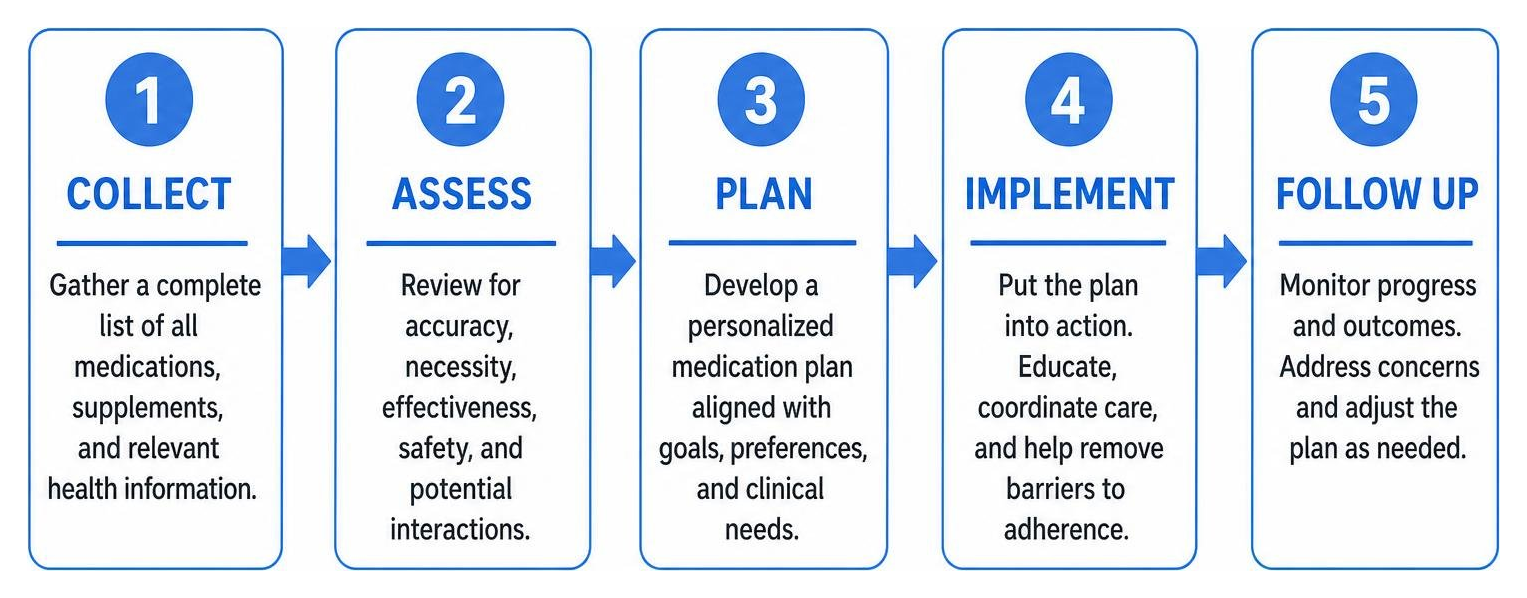
During an initial evaluation – similar to what a psychiatric evaluation looks like in behavioral healthcare – your provider reviews your current symptoms, mental health history, medical background, sleep, appetite, substance use, stressors, previous medication responses, and personal goals.
Creating and Maintaining an Accurate Medication Record
The foundation of safe care is an up-to-date medication record. You can build this using the “brown bag method”: gather every prescription bottle, over-the-counter pain reliever, sleep aid, allergy medicine, herbal product, and vitamin supplement into a bag and review them directly with your provider.
Your medication record should include:
- Brand and generic medication names
- Exact strength and dose (e.g., 20 mg tablet)
- Dosing schedule and timing (e.g., once daily with morning food or at bedtime)
- Clinical reason for taking it (such as depression, anxiety, mood stabilization, sleep, or attention)
- Prescribing clinician’s name and contact information
- Documented allergies, side effects, or past medication reactions
Developing a Patient-Centered Treatment Plan
Once your complete history is collected, you and your provider establish a personalized plan. This collaborative step clarifies why your psychiatry provider chose that medication and what goes into the decision, tailoring treatment choices to your symptoms, biology, previous medication responses, safety needs, and daily lifestyle. Your plan may include target symptoms, expected timelines, lab tests when appropriate, therapy recommendations, and follow-up appointments to evaluate progress.
Practical Tools for Daily Adherence, Storage, and Safe Disposal
Even the most thoughtfully designed psychiatric treatment plan cannot help if doses are skipped, doubled, or stopped abruptly. Integrating practical organizational tools into your everyday environment makes adherence easier and gives your provider more accurate information about how treatment is working.
| Tool Type | Best Suited For | Key Advantages | Considerations |
|---|---|---|---|
| Weekly / Monthly Pillboxes | Daily psychiatric medication routines | Visual confirmation of taken doses; morning/night separation | Must be refilled carefully and kept private or secure |
| Smartphone Apps & Alarms | People with busy schedules or attention challenges | Automated alerts, refill reminders, digital tracking logs | Requires phone battery and regular device checking |
| Blister / Strip Packaging | Complex multi-dose regimens | Pre-sorted doses by date and time directly from the pharmacy | Can be harder to modify if a psychiatric dose changes mid-month |
| Smart Automated Dispensers | High-risk patients, seniors, or people needing caregiver support | Audio/visual alarms; locked access helps prevent double dosing | Higher upfront cost; requires power/internet |
Overcoming Common Adherence, Side Effect, and Cost Barriers
If you are struggling to keep up with your mental health medications, you are not alone. Common obstacles have practical solutions:
- Forgetfulness: Habit-stack your medicine by placing your pillbox next to your morning coffee maker, toothbrush, or bedtime routine.
- Mild Side Effects: Let your prescriber know right away. Simple adjustments—such as taking a dose with food, changing timing, slowing a titration schedule, or considering an alternative—may help.
- Feeling Better: Do not stop medication suddenly just because symptoms improve. Improvement is often a sign the treatment plan is helping.
- Prescription Costs: Never walk away from the pharmacy counter empty-handed due to high copays. Ask your clinician or pharmacist about bioequivalent generic substitutions, manufacturer copay cards, or patient assistance programs.
Safe Home Storage and Privacy
Where you keep your medicine matters. Heat, humidity, privacy, and household safety all affect psychiatric medication routines. Despite the name, the bathroom “medicine cabinet” is often the worst place for prescriptions because steam can degrade chemical potency and cause capsules to break down prematurely.
- Ideal Environment: Keep medications in a cool, dry location away from direct sunlight, such as a high bedroom closet shelf or a dedicated kitchen cabinet away from the stove.
- Child and Pet Safety: Always secure childproof caps and keep all bottles out of sight and reach of children and household pets.
- Privacy and Consistency: Choose a location that supports your daily routine while protecting your privacy and preventing missed doses.
- Special Storage: If a medication requires refrigeration, keep it in the main compartment of the fridge—never in the door where temperature fluctuates.
Environmentally Responsible Medication Disposal
Expired or discontinued medicines should never linger in your home where they risk accidental ingestion, confusion, or accidental use after a treatment change.
- Drug Take-Back Programs: The safest option is using dedicated take-back kiosks located at local pharmacies, hospitals, or community centers.
- Household Trash Method: If a take-back kiosk is unavailable, mix whole pills (do not crush) with an unpalatable substance like used coffee grounds or cat litter in a sealed plastic bag before placing it in the trash.
- Flushing: Never flush medications down the toilet or sink unless the FDA package insert explicitly instructs you to do so, as flushed chemicals can contaminate public waterways.
Specialized Behavioral Health and Long-Term Treatment
Mental healthcare requires nuanced, attentive medication monitoring. Combining pharmacological care with supportive therapy provides the most sustainable path to recovery. We often highlight the benefits of Combining Mental Health Therapy Skills With Medication Treatment to give patients both biological symptom relief and practical coping tools.
Maintaining consistent care is essential for lasting stability, as discussed in our guide on Maintenance Treatment in Behavioral Health and Psychiatry: The Value of Long-Term Care.
Psychiatric Medication Management and Safety Protocols
Specialized psychiatric medication management involves far more than simply calling in a prescription. As we explore in “Medication Management Is More Than a Refill: What Your Psychiatric Provider Is Actually Monitoring“, your behavioral health provider continuously assesses subtle mood shifts, sleep architecture, metabolic health, cognitive clarity, and vital signs.
Overcoming societal stigma surrounding mental health prescriptions is part of this journey. Taking medication for anxiety, depression, bipolar disorder, ADHD, or another mental health condition can be an evidence-based medical tool designed to support biological wellness, emotional stability, and daily functioning.
Navigating Regimen Adjustments and Discontinuation
Finding the right psychotropic medication can take patience. Understanding why finding the right mental health medication is a process helps set realistic expectations regarding titration schedules, therapeutic windows, side effect monitoring, and initial adaptation periods.
If you ever consider stopping a treatment, review “Can You Stop Taking Antidepressants? What You Should Know Before Making a Decision“. Abruptly halting psychiatric medications can trigger uncomfortable discontinuation symptoms or rebound mood episodes. Your prescriber can guide you through a gradual, safe tapering schedule to protect your health.
Frequently Asked Questions About Psychiatric Medication Safety
What should I do if I experience unexpected side effects?
Document what you are experiencing, including the time of day, symptom severity, and how long after taking your dose the issue occurred. For non-emergency symptoms—such as mild nausea, dry mouth, drowsiness, restlessness, appetite changes, or minor sleep changes—contact your prescribing clinician or pharmacist before altering your dose. If you experience severe warning signs, such as facial swelling, hives, difficulty breathing, severe chest pain, suicidal thoughts, extreme agitation, confusion, or symptoms of mania, seek urgent or emergency medical attention immediately.
How does the brown bag method improve psychiatric medication safety?
The brown bag review involves bringing all your active prescriptions, over-the-counter products, vitamins, herbal supplements, and sleep aids in their original containers to your clinical visit. This hands-on check lets your provider inspect expiration dates, verify exact dosing instructions, detect accidental brand-and-generic duplications, and catch unrecorded interactions that may affect mood, sleep, alertness, or treatment response.
Can I stop taking my psychiatric medication if my symptoms improve?
No, you should never stop taking psychiatric medications without medical supervision. Feeling healthier, more stable, or symptom-free is often direct evidence that your treatment is working as intended. Abruptly stopping antidepressants, mood stabilizers, anti-anxiety medications, sleep medications, or other psychiatric treatments can cause discontinuation symptoms, rebound anxiety or depression, mood destabilization, or other complications. Always consult your healthcare provider to discuss whether a supervised dose reduction is appropriate.
Conclusion
Safe psychiatric medication management is a continuous, empowering partnership that supports emotional stability, daily functioning, and long-term mental health. By maintaining an accurate medication record, setting up reliable daily routines, storing prescriptions safely, and communicating openly with your mental health care team, you take a more active role in your treatment journey.
At KindMind Behavioral Health, our multidisciplinary team is dedicated to providing compassionate, integrated care that combines psychotherapy with specialized psychiatric oversight. Reach out to us today to build a personalized, safe, and effective treatment plan tailored to your life.