

Everything You Need to Know About Psychiatric Evaluation Purpose and Process
Everything You Need to Know About Psychiatric Evaluation Purpose and Process
Everything You Need to Know About Psychiatric Evaluation Purpose and Process
Understanding Clinical Assessment: Definition, Purpose, and Candidates
A clinical evaluation serves as the cornerstone of meaningful mental health care. Rather than offering a quick label, it provides a comprehensive map of your emotional, psychological, and biological well-being. At KindMind Behavioral Health, we look at the whole person—recognizing that mental health exists at the intersection of biological predispositions, psychological experiences, and social determinants such as community, housing, and life stress.
When symptoms begin causing noticeable functional impairment—disrupting your career, education, sleep, or personal relationships—an assessment helps clarify what is happening beneath the surface. Navigating the mental healthcare system can feel overwhelming, but understanding the different levels of mental health care helps you to identify where to start and what type of support matches your current needs.
Who Needs a Psychiatric Evaluation?
Deciding when to seek specialized care often starts with recognizing subtle shifts that refuse to go away. You might consider scheduling an evaluation if you or someone you care about experiences:
- Symptom persistence, such as sadness, worry, or mood swings lasting several weeks or months.
- Noticeable behavioral shifts, emotional volatility, or social withdrawal.
- Sudden or progressive cognitive decline, memory lapses, or extreme concentration difficulties.
- Academic challenges in children and teens, or declining workplace performance in adults.
- Relationship friction and communication breakdowns driven by emotional distress.
If you are unsure whether your primary care doctor, a counselor, or a psychiatric prescriber is the right first stop, reading more about Therapy vs. Primary Care vs. Psychiatry can help you choose the right path forward.
Routine Assessments vs. Emergency Mental Health Consultations
Psychiatric assessments are tailored to the setting and urgency of the situation. A routine outpatient evaluation is an unhurried, collaborative discussion that explores your complete personal background, medical health, and wellness goals.
In contrast, an emergency mental health consultation focuses on acute crisis presentation, immediate safety, and medical stability. In acute situations—such as sudden psychosis, profound intoxication, or immediate self-harm risk—emergency clinicians use rapid triage protocols to protect the patient. Understanding when to seek emergency care or outpatient care for your mental health ensures you or your loved one receives the safest, most effective level of intervention.
Key Components of a Comprehensive Psychiatric Evaluation
A thorough assessment follows established clinical standards, such as the APA Practice Guidelines for the Psychiatric Evaluation of Adults, to build an accurate differential diagnosis. The goal is to understand not just what you are feeling today, but how your background, developmental milestones, and medical history shape your experiences. If you are curious about what happens during a session, reviewing what a psychiatric evaluation looks like can help ease any pre-appointment jitters.
The Biopsychosocial Interview, Medical History, and Substance Screening
The biopsychosocial interview is a deep dive into your life narrative. We review past psychiatric treatments, previous medication trials, dosages, and adherence barriers to see what has helped and what hasn’t.
Because physical health directly influences the brain, a review of general medical conditions is essential. For instance, underlying thyroid disorders, vitamin deficiencies, or sleep apnea can closely mimic mood and anxiety disorders. Standard lab work—including complete blood counts, metabolic panels, and thyroid testing—helps rule out organic causes.
Similarly, routine substance screening for alcohol, tobacco, and prescription or illicit drug use is standard. Standardized questionnaires and collateral data improve the detection of risky drinking and substance interactions, ensuring that your psychiatric care and medication management plans are safe and effective.
The Mental Status Examination: Evaluating Cognition, Mood, and Affect
The Mental Status Examination (MSE) is the psychiatric equivalent of a physical exam. It captures an objective snapshot of psychological functioning during the clinical encounter.
| MSE Domain | What the Clinician Observes | Clinical Significance |
|---|---|---|
| Appearance & Behavior | Grooming, hygiene, motor agitation, eye contact | Identifies self-care, anxiety levels, or psychomotor slowing |
| Speech Patterns | Rate, rhythm, volume, and latency of speech | Can indicate mania (pressured speech), depression, or neurological concerns |
| Mood vs. Affect | Subjective mood (in your words) vs. observed emotional expression | Assesses emotional congruence, range, and responsiveness |
| Thought Process | Organization of ideas (linear, circumstantial, tangential) | Detects racing thoughts, disorganization, or cognitive slowing |
| Thought Content | Preoccupations, phobias, delusions, or intrusive thoughts | Clarifies obsessions, paranoia, or reality testing |
| Perception | Presence of hallucinations or illusions | Distinguishes perceptual distortions from reality |
| Cognition & Reasoning | Orientation, memory, attention, abstract reasoning | Screens for cognitive impairment or executive dysfunction |
| Insight & Judgment | Awareness of illness and decision-making capacity | Helps guide treatment collaboration and safety planning |
Understanding the clinical structure of the Mental Status Examination helps illustrate how objective observations combine with your personal narrative to form an accurate diagnostic picture.
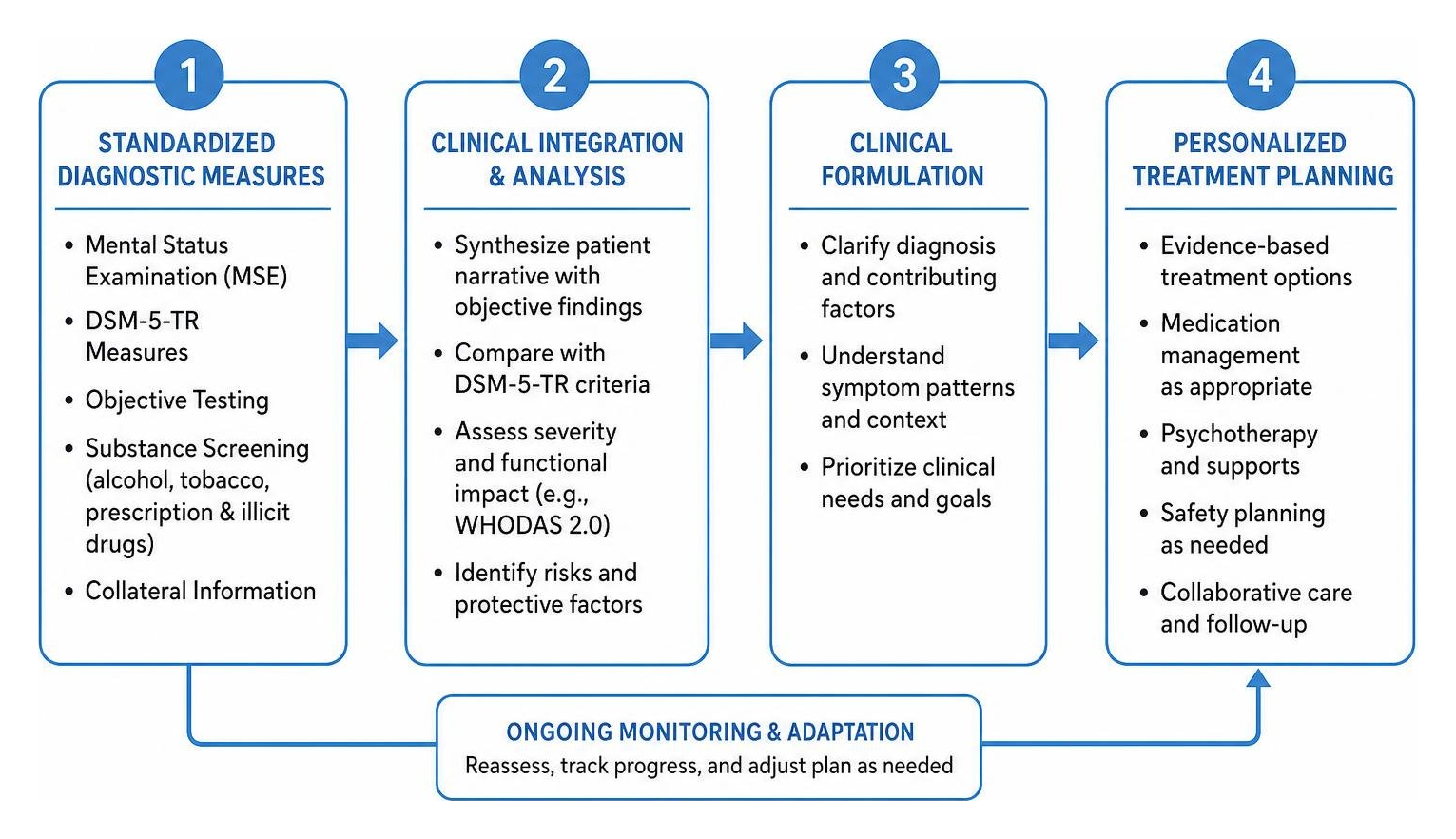
Standardized Diagnostic Tools, DSM-5-TR Measures, and Objective Testing
To complement clinical conversations, providers often integrate validated diagnostic scales aligned with the DSM-5-TR. These include:
- Level 1 Cross-Cutting Symptom Measures: Broad screenings across 13 clinical domains for adults and 12 domains for children and adolescents.
- Level 2 Symptom Scales: In-depth questionnaires for specific areas flagged during initial screening (such as depression, panic, or sleep disturbances).
- WHODAS 2.0: A standardized assessment evaluating daily functional disability across six areas of everyday living.
- Specialized Testing: Neuropsychological assessments or neuroimaging scans when cognitive impairment or structural neurological concerns require investigation.
Resources like the Merck Manual’s guide to initial psychiatric assessments highlight how these objective measures enhance clinical judgment without replacing the human element of clinical care.
Crucial Safety and Clinical Risk Assessments
Safety assessments are a routine, standard component of every psychiatric consultation. Far from being an interrogation, these conversations are collaborative, compassionate check-ins designed to keep you safe and provide support when life feels overwhelming.
Evaluating Suicide Risk and Self-Harm Ideation
Assessing suicide risk involves open, empathetic dialogue. Providers distinguish between passive thoughts (wishing to disappear or go to sleep) and active intent with a specific suicide plan and access to means.
Clinicians also evaluate history of prior attempts, non-suicidal self-injury, and essential protective factors—such as personal goals, family ties, and belief systems. When risk is present, lethal means counseling and personalized safety planning empower individuals with practical coping mechanisms and crisis support.
Assessing Aggression Risk, Impulsivity, and Safety Planning
When emotional distress presents as intense irritability, impulsivity, or aggressive behavior, clinicians evaluate the underlying drivers. This includes assessing homicidal ideation, impulse control challenges, or persecutory delusions.
Collateral history from trusted loved ones can provide valuable context. Providers use de-escalation strategies and, in rare circumstances involving imminent threats, uphold legal mandates like the Tarasoff duty to protect individuals while treating the patient with dignity and care.
Integrating Trauma History and Cultural Factors into Treatment Planning
Mental wellness does not exist in a vacuum. A complete psychiatric assessment honors your life story, personal background, and community context.
Trauma-Informed Diagnostic Formulations
A significant proportion of individuals seeking mental health support have experienced traumatic events, yet trauma-related conditions are frequently overlooked during routine visits. Whether stemming from adverse childhood experiences, acute accidents, or systemic stress, trauma deeply impacts emotional regulation and interpersonal trust.
At KindMind Behavioral Health, we approach evaluations with trauma sensitivity. Recognizing trauma allows us to tailor psychotherapy and medication management without re-traumatizing you during the intake process.
Cultural Formulation Interviews and Collaborative Family Involvement
Cultural values shape how we express distress, perceive illness, and seek support. Tools like the 16-question Cultural Formulation Interview help providers understand:
- Cultural idioms of distress (how emotional pain is described in your community).
- Perceived causes of symptoms and preferred healing practices.
- Potential systemic barriers or past healthcare experiences.
Family members and caregivers often provide invaluable collateral insights. With patient consent, collaborative family involvement strengthens the therapeutic alliance while maintaining strict confidentiality standards.
Navigating the Assessment Experience from Intake to Ongoing Care
Taking the first step toward specialized psychiatric care is an act of courage. Knowing what to expect makes the process transparent and manageable. For more guidance on finding the right provider, explore “Finding a Mental Health Therapist or Psychiatrist.”
What to Expect During and After Your Psychiatric Evaluation
An initial evaluation typically lasts between 60 and 90 minutes. You will complete brief intake questionnaires beforehand, followed by an open-ended conversation covering your current symptoms, medical history, and goals.
By the end of your appointment, your provider will discuss initial findings, outline differential diagnoses, and collaborate on a personalized roadmap for recovery. Finding a supportive clinician is essential, so take time to learn how to choose the best psychiatric prescriber for your specific needs.
Developing Treatment Plans and Initiating Medication Management
Following an evaluation, care usually involves psychotherapy referrals, lifestyle modifications, or psychiatric medication management.
If pharmacotherapy is recommended, your prescriber will discuss potential benefits, side effects, and why a specific medication is appropriate. Understanding the safety of psychiatric medications and why your psychiatric provider chose a specific medication helps you make confident, informed choices. Monitoring of the psychiatric medication chosen on an ongoing basis ensures your prescription remains safe, effective, and aligned with your wellness goals over time.
Frequently Asked Questions About Psychiatric Assessments
How long does a standard diagnostic assessment take?
Most initial outpatient evaluations last between 60 and 90 minutes. For complex presentations involving overlapping medical conditions or detailed trauma histories, providers may spread the assessment across two sessions to ensure a thorough, unhurried review.
Will I receive a formal mental health diagnosis and prescription immediately?
In many cases, providers provide an initial diagnostic impression and discuss medication options during the first session. However, if symptoms are nuanced or additional lab work is required, your clinician may recommend ongoing diagnostic tracking before finalizing a formal diagnosis or starting pharmacotherapy.
How does virtual psychiatric assessment compare to in-person visits?
Telehealth evaluations offer diagnostic accuracy and clinical outcomes comparable to in-person appointments. Secure, HIPAA-compliant video platforms provide a comfortable, accessible way to complete your evaluation and maintain follow-up medication management from home.
Conclusion
An accurate clinical assessment is the foundation of effective, lasting mental health recovery. By combining evidence-based diagnostics, thorough medical reviews, and compassionate dialogue, evaluations provide clarity and direction. At KindMind Behavioral Health, we are dedicated to partnering with you through integrated therapy and psychiatric services, offering flexible care tailored to your unique journey.
To take the next step toward clarity and personalized support, explore KindMind Behavioral Health’s comprehensive care and schedule an evaluation today.