

Find Outpatient Therapy Options: A Comprehensive Guide
Find Outpatient Therapy Options: A Comprehensive Guide
Find Outpatient Therapy Options: A Comprehensive Guide
Outpatient Therapy Lets You Get Support Without Putting Life on Hold
Outpatient therapy is mental health care you receive while continuing to live at home and manage daily life. You may meet with a therapist in person or by telehealth, often on a regular schedule, for support with concerns like anxiety, depression, trauma, relationship stress, or major life changes.
For many people, it is a practical first step toward feeling better. Sessions can be individual, family, or group-based. If you need more support than weekly therapy, intensive outpatient programs (IOP) and partial hospitalization programs (PHP) offer more structured care without an overnight hospital stay.
At KindMind Behavioral Health, outpatient care can help you build skills, set clear goals, and explore whether therapy, medication management, or both may fit your needs. Flexible care formats can make it easier to seek help while staying connected to work, school, family, and home.
What Is Outpatient Therapy and How Does It Work?
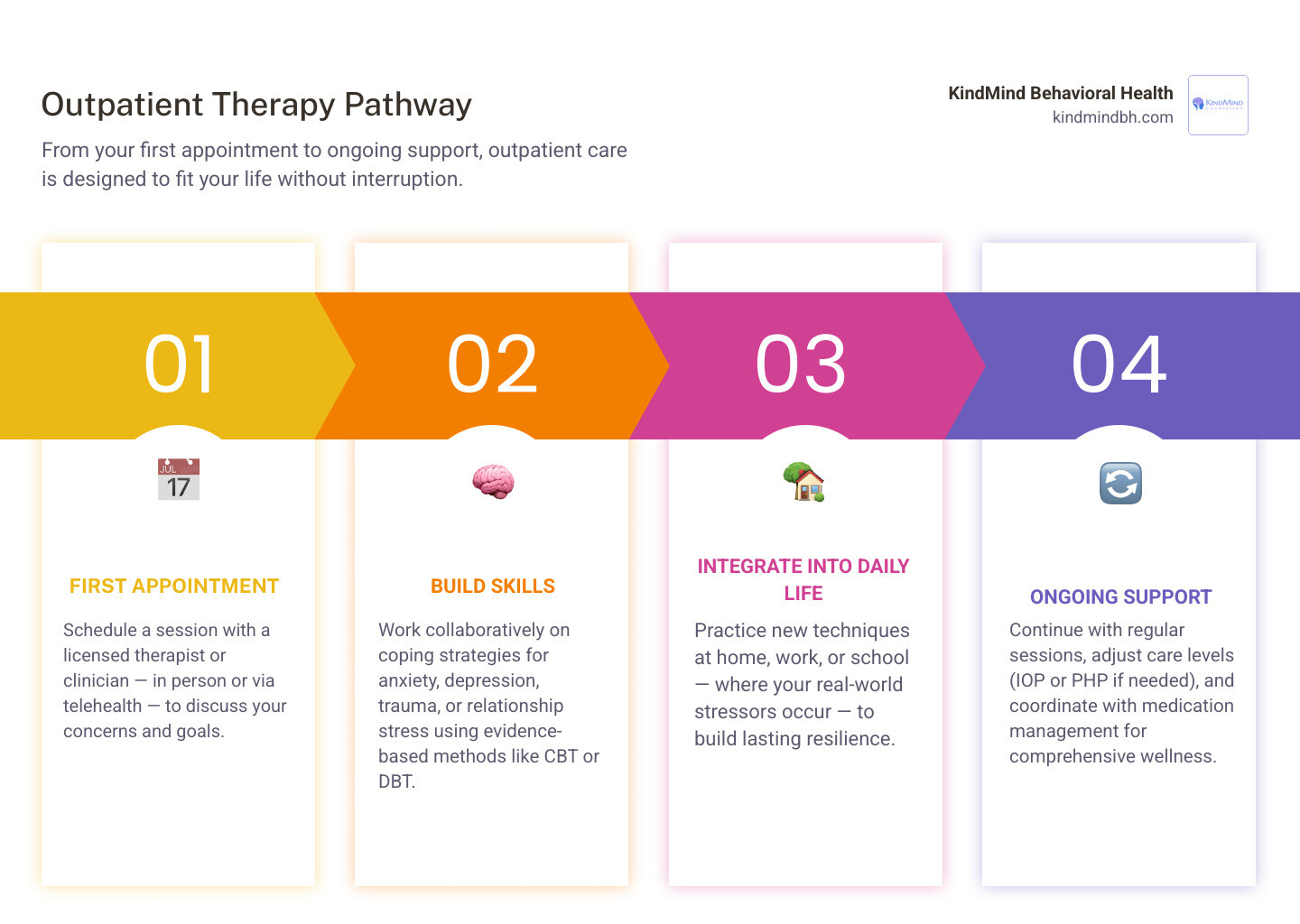
Outpatient care is designed to meet you right where you are. Rather than checking into a medical facility or staying overnight in a clinic, you schedule appointments that fit around your job, classes, parenting duties, and everyday life. You attend your scheduled session, work collaboratively with your clinical team, and head right back to your routine.
At its core, this approach emphasizes autonomy and personal independence. Healing rarely happens in a vacuum; practicing coping techniques in the very environment where your stressors occur—such as at home, in the workplace, or around social circles—allows you to build real-world resilience.
Within our practice, outpatient care often begins with dedicated individual therapy sessions. During these meetings, you partner with a clinician to identify recurring emotional hurdles, explore behavioral patterns, and discover practical strategies for self-regulation. Because outpatient care is built on steady consistency, it acts as a stabilizing foundation, giving you dedicated space each week to pause, reflect, and recalibrate without disrupting your entire life.
Outpatient Care vs. Inpatient and Residential Treatment
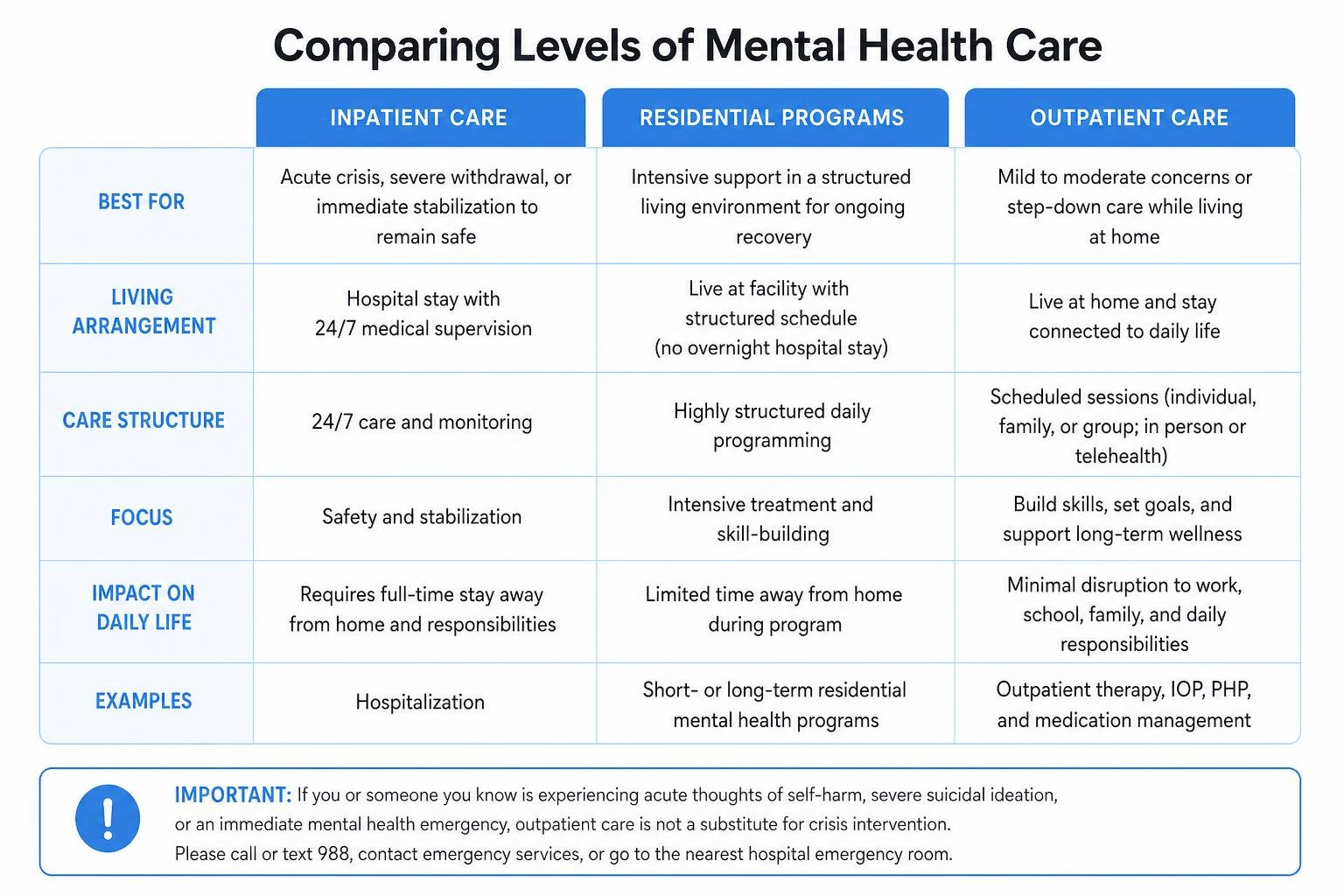
Choosing the right type of support starts with understanding the different settings available for mental health care. Inpatient and residential treatment facilities offer 24/7 medical supervision and structured living environments, which are necessary when someone is experiencing an acute crisis, severe withdrawal, or needs immediate stabilization to remain safe.
In contrast, outpatient care allows you to remain living independently in your community. It can serve as an accessible primary option for mild-to-moderate concerns, or as a structured step-down program for someone transitioning home after a hospital stay. By eliminating room-and-board costs and minimizing disruptions to your employment, outpatient services offer practical flexibility for sustainable, long-term care.
Emergency Care Note: If you or someone you know is experiencing acute thoughts of self-harm, severe suicidal ideation, or an immediate mental health emergency, outpatient care is not a substitute for crisis intervention. Please immediately call or text the Suicide & Crisis Lifeline at 988, contact emergency services, or visit the nearest hospital emergency room.
If you want a deeper look into clinical settings, take some time to understand the different levels of mental health care to determine what aligns best with your needs.
The Spectrum of Outpatient Therapy Levels of Care
Outpatient care is not a one-size-fits-all model. It spans a clear continuum that adjusts based on the intensity of support you require:
- Standard Outpatient Therapy: Typically consists of one 45-to-60-minute session per week (or bi-weekly). It is ideal for individuals managing daily responsibilities who want steady, ongoing support for mood, stress, relationships, or psychiatric medication monitoring.
- Intensive Outpatient Programs (IOP): Provides a step up in structure, usually involving three hours of therapy per day, three to five days per week. IOP allows you to participate in intensive group and individual modalities while still sleeping in your own bed at night.
- Partial Hospitalization Programs (PHP): The most intensive outpatient option, often requiring five to six hours of structured clinical programming per day, five days a week. PHP offers comprehensive day treatment with medical oversight while allowing you to return home every evening.
Families navigating care for younger family members can learn more about structured programs and finding the right outpatient therapy for mental health in adolescents.
| Care Level | Typical Time Commitment | Primary Treatment Formats | Best Suited For |
|---|---|---|---|
| Standard Outpatient | 1–2 hours per week | Individual, couples, or family sessions; medication management | Mild to moderate distress; long-term skill maintenance |
| Intensive Outpatient (IOP) | 9–15 hours per week (3–5 days) | Structured group therapy, skill-building workshops, individual check-ins | Moderate to severe symptoms needing extra structure without 24/7 supervision |
| Partial Hospitalization (PHP) | 20–30 hours per week (5 days) | Comprehensive daytime clinical care, medical check-ins, multi-modal therapies | Acute symptom stabilization; step-down from inpatient hospitalization |
Conditions Treated and Modalities Used in Outpatient Settings
Outpatient clinics support a broad range of mental and behavioral health conditions. Many people seek care for persistent anxiety disorders, major depressive episodes, mood regulation difficulties, complex grief, social burnout, and post-traumatic stress.

Modern outpatient care frequently pairs psychological counseling with medical assessment. Research highlighted by the National Institute of Mental Health emphasizes that combining psychotherapy with tailored medical care often provides more robust, sustained outcomes than either intervention alone.
At KindMind Behavioral Health, we integrate compassionate psychotherapy with comprehensive psychiatric medication management. Our medical prescribers conduct thorough psychiatric evaluations, discuss potential biological contributors to mental health, monitor therapeutic responses over time, and ensure any prescribed medication regimen remains safe, thoughtful, and well-aligned with your individual wellness goals. All medication decisions are educational, collaborative, and completely individualized.
Evidence-Based Approaches in Outpatient Therapy
Licensed providers utilize structured, research-backed modalities to help you understand your thoughts, emotions, and interpersonal behaviors. These therapeutic approaches include:
- Cognitive Behavioral Therapy (CBT): Focuses on identifying and reframing automatic, unhelpful thinking patterns while developing practical problem-solving behaviors.
- Dialectical Behavior Therapy (DBT): Emphasizes core skills in mindfulness, distress tolerance, emotion regulation, and interpersonal effectiveness.
- Acceptance and Commitment Therapy (ACT): Encourages accepting difficult emotions and physiological sensations while committing to actions that align with your deepest personal values.
- Systemic and Relational Therapies: Explores communication dynamics and conflict cycles within relationships, often addressed through structured couples and family therapy.
Specialized Outpatient Care for Children, Adolescents, and Families
Children and teens process stress, emotional dysregulation, and developmental milestones differently than adults. Outpatient behavioral health care tailored for youth addresses school avoidance, academic anxiety, social media pressure, attention challenges, and emotional outbursts.
Pediatric and adolescent therapists use creative, developmental approaches that make clinical concepts accessible and engaging. Furthermore, because a child’s environment directly shapes their healing, outpatient programs frequently incorporate parents and caregivers into the process. By teaching families shared communication tools and co-regulation strategies, outpatient care helps establish a supportive, calmer home dynamic.
Choosing the Right Provider and Preparing for Your First Session
Finding the right clinical fit is one of the most important aspects of your mental health journey. The relationship you form with your provider—known clinically as the therapeutic alliance—plays a substantial role in your overall treatment experience and comfort.

When researching providers, look for clinicians whose clinical experience, communication style, and practice philosophies align with what you value. You can find useful tips on this process by reading our guide on Finding the Right Fit with a Therapist or Psychiatry Provider.
Navigating Clinician Credentials and Care Formats
The behavioral health field includes professionals with distinct educational backgrounds and clinical specialties:
- Master’s-Level Clinicians: Including Licensed Professional Counselors (LPC) and Licensed Master Social Workers (LMSW), who specialize in psychotherapy, emotional processing, and skill-building.
- Doctoral-Level Psychologists: Professionals holding a Ph.D. or Psy.D. who conduct specialized psychological testing, evaluations, and evidence-based therapy.
- Psychiatric Prescribers: Medical Doctors (MD), Doctors of Osteopathic Medicine (DO), and Psychiatric Mental Health Nurse Practitioners (PMHNP) who specialize in psychiatric diagnostic assessments and medication management.
Care can be delivered through different formats depending on what suits your lifestyle best. You can attend appointments at an in-person clinic or utilize secure virtual counseling options. Telehealth provides flexibility for busy professionals, students, and parents across Michigan, while in-person sessions offer a dedicated physical retreat outside your home environment.
What to Expect During an Initial Evaluation and Intake
Your initial outpatient visit is designed to help your provider understand your story and current needs. During this 50-to-60-minute intake evaluation, you and your clinician will explore several key areas:
- Your primary reasons for seeking support and current symptoms
- Personal and family medical and psychiatric history
- Daily lifestyle factors, sleep routines, stress levels, and social support systems
- Past experiences with counseling or psychiatric medications
Together, you will begin setting collaborative treatment objectives. For a closer look at how clinicians organize these milestones, review our insights on Goals Setting in Therapy.
Insurance Coverage and Financial Considerations for Care
Navigating insurance for behavioral health services can feel intimidating, but standard outpatient care is widely recognized by major health plans. Federal parity laws generally require commercial insurers to offer mental health benefits comparable to medical and surgical coverage.
At KindMind Behavioral Health, we believe high-quality psychiatric care and therapy should be accessible. We accept most major commercial and non-commercial insurance plans, including:
- Aetna
- Blue Cross Blue Shield (BCBS)
- Cigna
- Humana
- Medicaid
- Medicare
- Priority Health
- UnitedHealthcare
Unlike acute inpatient admissions, routine outpatient therapy typically does not require extensive prior authorization from insurance companies before your first session. However, benefits, network tiers, and coverage rules vary across plans. We always recommend contacting your insurance carrier directly or reaching out to our administrative team so we can help verify your specific behavioral health benefits before your appointment.
Frequently Asked Questions About Outpatient Therapy
Do I need a doctor’s referral to start outpatient treatment?
In most cases, you do not need a physician’s referral to schedule standard outpatient therapy or an initial psychiatric evaluation. Many individuals reach out directly to begin care. However, certain specialized insurance networks or managed care plans may request a referral from your primary care provider. Our administrative team can verify your plan requirements during intake.
How many hours per week does outpatient treatment typically require?
Standard outpatient therapy usually requires just one hour per week (or one hour every other week), making it easy to integrate into a standard work or school schedule. If you are participating in psychiatric medication management, appointments are often scheduled monthly or quarterly once your routine is established. Higher levels of care, such as IOP or PHP, require between 9 and 30 hours per week.
Can outpatient therapy be conducted entirely through telehealth?
Yes. Teletherapy and virtual psychiatric services are available for individuals throughout Michigan. Research published by the American Psychological Association shows that virtual psychotherapy offers comparable clinical efficacy to in-person visits for many conditions, including depression and anxiety. Secure, HIPAA-compliant video platforms allow you to connect with your clinician from the comfort and privacy of your home.
Conclusion
Taking the step to prioritize your mental health is an empowering investment in your overall well-being. Outpatient care offers a sustainable pathway to heal, learn practical coping mechanisms, and find balance—all while staying actively engaged in your daily life, career, and family commitments.
Whether you are looking for weekly individual therapy, relational counseling, specialized adolescent care, or medical evaluations and psychiatric medication management, our team is here to support you. KindMind Behavioral Health proudly provides comprehensive outpatient mental health services for individuals and families across Michigan, with physical offices in Clarkston and Rochester, as well as virtual care options statewide.
If you are ready to take the next step in your wellness journey, we invite you to reach out to our team and book an appointment or consultation with KindMind Behavioral Health today.
The information in this article is for educational purposes only and is not intended as medical or mental health advice. Individuals should consult a licensed healthcare professional regarding their specific health needs.