

A Quick Start Guide to Comparing SSRIs vs SNRIs for Depression
A Quick Start Guide to Comparing SSRIs vs SNRIs for Depression
A Quick Start Guide to Comparing SSRIs vs SNRIs for Depression
SSRIs vs. SNRIs: The Difference at a Glance
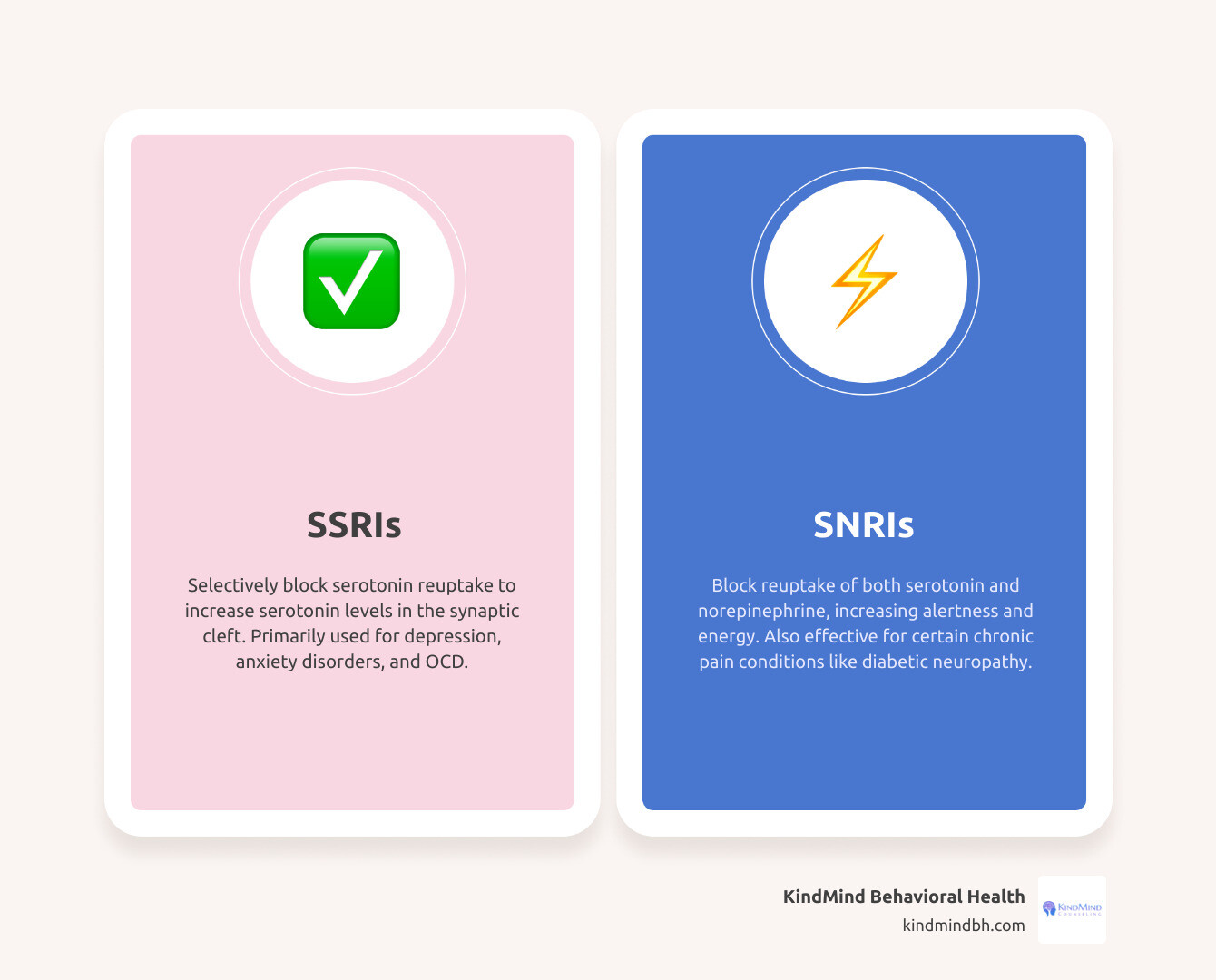
SSRIs and SNRIs both treat depression, but they work on different brain chemicals. SSRIs increase the availability of serotonin. SNRIs increase the availability of both serotonin and norepinephrine. Both can also help with anxiety. An SNRI may be worth discussing if you also have certain types of chronic pain.
Neither class is best for everyone. The right choice depends on your symptoms, health history, other medicines, and how you respond to treatment. Both can take several weeks to help, and both can cause side effects. A prescriber can help you weigh the options and make changes safely.
At KindMind Behavioral Health, we can help you talk through those choices. We accept most major commercial and non-commercial insurance plans.
Understanding SSRIs vs SNRIs: How They Work in the Brain
When depression or chronic anxiety settles in, everyday tasks can feel like wading through deep water. In the field of psychiatry, understanding how brain messaging works helps us make sense of why certain medications offer relief. Brain cells, or neurons, communicate by releasing chemical messengers called neurotransmitters across tiny gaps known as synaptic clefts.
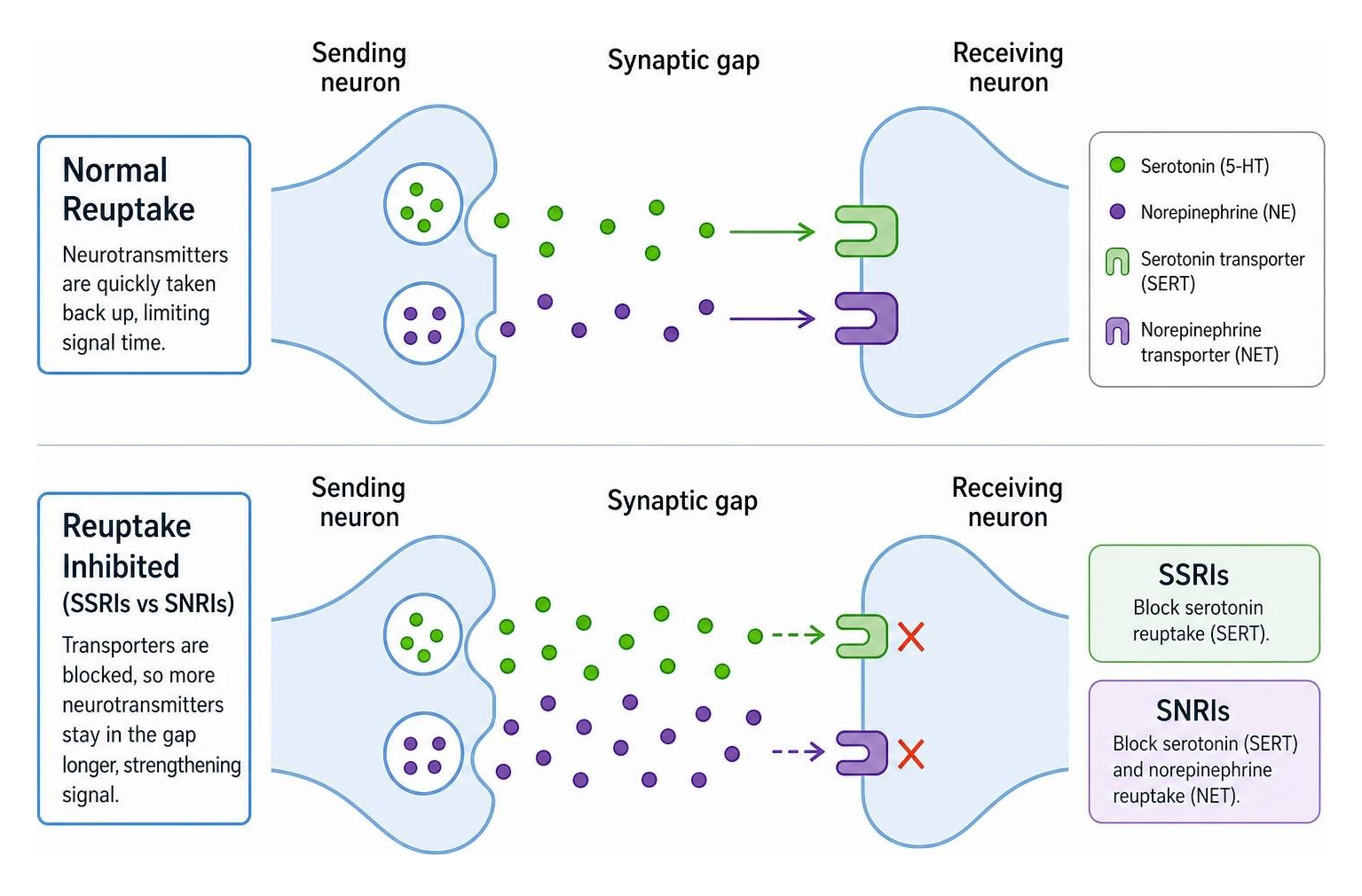
Once a neurotransmitter carries its message to the next neuron, specialized protein structures called transporters gather up the remaining chemicals to recycle them. This process is known as reuptake.
The classic monoamine hypothesis of depression suggests that imbalances or reduced signaling in specific neurotransmitters, particularly serotonin and norepinephrine, contribute to depressive symptoms and emotional distress. By slowing down the reuptake process, antidepressants allow these messengers to stay in the synaptic gap longer, strengthening the lines of communication between brain cells.
If you are exploring psych medicine safety and mental health treatment, you will find that both SSRIs and SNRIs are built on this reuptake principle, yet they target slightly different pathways.
Selective Serotonin Reuptake Inhibitors (SSRIs)
SSRIs focus their attention primarily on serotonin transporters. Serotonin is a key neurotransmitter involved in regulating mood, sleep, appetite, emotional resilience, and feelings of calm. By selectively inhibiting the reuptake of serotonin, SSRIs keep higher levels of this chemical active in the brain.
Common medications in this class include several options that a prescriber may consider based on individual needs. Because of their targeted focus and long track record of safety, SSRIs are often recommended as a primary option for depression and various anxiety disorders. For a broader look at modern options, our Adult Psychiatric Medication Guide covers how these tools fit into everyday care.
Serotonin-Norepinephrine Reuptake Inhibitors (SNRIs)
SNRIs offer a dual-action mechanism. Instead of focusing only on serotonin, they block the reabsorption of both serotonin and norepinephrine by targeting both serotonin and norepinephrine transporters.
Norepinephrine plays an important role in alertness, executive function, physical energy, and the body’s response to stress. By elevating both messengers, SNRIs can help improve emotional balance while providing an extra lift in focus and day-to-day stamina.
For individuals whose depression presents alongside heavy physical fatigue, low motivation, or sluggishness, the noradrenergic boost of an SNRI can be a meaningful consideration.
Key Differences: Side Effects, Indications, and Clinical Decisions
When evaluating ssris vs snris, both classes have proven therapeutic benefits, but their unique mechanisms lead to distinct clinical profiles. Learning how providers choose a specific medication involves looking at physical symptoms, co-occurring conditions, and personal lifestyle factors.
| Feature | SSRIs (Selective Serotonin Reuptake Inhibitors) | SNRIs (Serotonin-Norepinephrine Reuptake Inhibitors) |
|---|---|---|
| Primary Neurotransmitters | Serotonin only | Serotonin and Norepinephrine |
| Common Prescriptions | Several SSRI options are available | Several SNRI options are available |
| Common Indications | Major depression, generalized anxiety, panic disorder, OCD, PTSD | Major depression, generalized anxiety, panic disorder, chronic pain |
| Specialized Uses | Social anxiety, obsessive-compulsive patterns | Diabetic neuropathy, fibromyalgia, chronic musculoskeletal pain |
| Typical Side Effects | Nausea, sleep changes, sexual dysfunction, mild digestive upset | Nausea, dry mouth, sweating, dizziness, potential blood pressure increase |
Comparing Side Effect Profiles: SSRIs vs SNRIs
Because both medication classes raise serotonin levels, they share several common, usually temporary side effects. Many individuals experience mild gastrointestinal distress, such as nausea or loose stools, during the initial weeks of treatment because the digestive tract contains a large number of serotonin receptors. Sexual side effects, such as reduced libido or delayed climax, can also occur across both groups.
SNRIs, however, can introduce a few distinct physical responses due to their effect on norepinephrine. Norepinephrine activates elements of the autonomic nervous system. As a result, SNRIs may cause symptoms related to mild autonomic arousal, including:
- Dry mouth and increased sweating
- Dizziness or lightheadedness
- Occasional headaches or insomnia
- Modest increases in resting heart rate or blood pressure
Because of the potential effect on the cardiovascular system, regular blood pressure monitoring is often recommended when starting or increasing the dose of an SNRI.
Chronic Pain and Other Specialized Indications
One major clinical distinction between these classes is the management of pain. The pathways in the central nervous system that modulate pain signals rely heavily on both serotonin and norepinephrine.
While SSRIs are exceptionally effective for conditions like obsessive-compulsive disorder (OCD), panic disorder, and post-traumatic stress disorder (PTSD), they rarely provide direct pain relief. In contrast, certain SNRIs have gained widespread approval for treating chronic pain syndromes, including:
- Diabetic peripheral neuropathy
- Fibromyalgia
- Chronic musculoskeletal or lower back pain
For a person managing both a depressive disorder and chronic bodily discomfort, choosing an SNRI may address both concerns with a single medication.
Clinical Efficacy: Are SSRIs vs SNRIs Better for Certain Conditions?
Decades of research indicate that overall efficacy rates for major depressive disorder are generally comparable between SSRIs and SNRIs. Neither group is universally superior for every patient.
However, clinical decision-making often hinges on specific symptom clusters. If an individual experiences depression characterized by intense agitation, panic, or irritability, an SSRI may provide a gentler, calming stabilization without overstimulating the nervous system.
Conversely, if depression manifests primarily as profound fatigue, brain fog, or psychomotor slowing, the dual action of an SNRI may offer better overall symptom relief.
What to Expect: Timelines, Adjustments, and Discontinuation
Starting a psychiatric medication is a collaborative journey that requires patience and close communication with your care team.
It is very common for patients to wonder why psychiatric medications take time to work. Although neurotransmitter levels rise within hours of taking a pill, the noticeable mood-lifting benefits take several weeks to appear.
Onset Timeline and Why Antidepressants Take Time
The delayed response occurs because the brain is doing complex structural work behind the scenes. Sustained increases in serotonin and norepinephrine stimulate the release of neurotrophic factors, such as brain-derived neurotrophic factor (BDNF).
These proteins encourage neurogenesis, the growth and repair of neuronal connections, and enhance overall neuroplasticity.
Most people notice subtle shifts in sleep, appetite, or physical energy within two to four weeks. Full therapeutic changes in mood, outlook, and emotional regulation typically take six to eight weeks.
Throughout this period, ongoing psychiatric monitoring under your provider ensures your body is tolerating the dose well, and being mindful that managing medication adjustments is a normal part of the process helps keep expectations realistic.
Managing Discontinuation Symptoms and Tapering
Antidepressants are not physically addictive, but the nervous system adapts to their daily presence. If a medication is stopped suddenly, a person may experience antidepressant discontinuation syndrome.
Symptoms can include:
- Dizziness, balance issues, and lightheadedness
- Flu-like feelings, fatigue, and muscle aches
- Vivid dreams or disrupted sleep
- Sensory disturbances, sometimes described as brief electric shock sensations or “brain zaps”
- Sudden waves of anxiety or irritability
Discontinuation symptoms are influenced heavily by the medication’s elimination half-life. Medications that leave the body rapidly, such as certain SNRIs or SSRIs, carry a higher chance of causing noticeable withdrawal symptoms if a dose is missed.
Medications with long half-lives clear out more gradually. Any decision to reduce or stop an antidepressant should always be done through a gradual, customized tapering protocol under the close supervision of a psychiatric provider.
Alternative Options and Comprehensive Treatment Plans
While SSRIs and SNRIs serve as reliable first-line tools, they are not the only answers available for mental wellness. When a medication does not bring sufficient relief, or when side effects make it difficult to continue, psychiatric providers can draw from several other approaches.
Atypical antidepressants, such as those that target norepinephrine and dopamine or enhance noradrenergic and specific serotonergic neurotransmission, offer valuable alternatives. Some can be helpful for individuals struggling with severe insomnia or appetite loss, while others avoid sexual side effects and can boost daily motivation.
Novel Antidepressants and Beyond Monoamines
In recent years, psychiatric research has expanded beyond the monoamine system into glutamatergic pathways and multimodal receptor targets. Novel agents, including medications that work through different biological pathways, offer alternative options for individuals who have not found adequate relief through standard approaches.
A prospective study evaluating treatment approaches in major depressive disorder observed that novel antidepressant therapies can produce significant symptom reductions, showing a mean Hamilton Depression Rating Scale (HAM-D) score reduction of 17.2 (Nawaz et al., 2024).
The same study noted favorable tolerability profiles, with mild or moderate side effects occurring in 25% of patients taking novel agents compared to 32% for SSRIs and 37% for SNRIs, supporting strong treatment continuation rates and a 19.7-point average improvement in quality of life metrics (Nawaz et al., 2024).
Lifestyle Interventions and Psychotherapy
Medication is most powerful when it acts as a foundation for broader healing. Integrating mental health therapy alongside psychiatric care creates a balanced, lasting recovery plan.
Our team frequently highlights the value of combining therapy skills with medication. Evidence-based modalities like Cognitive Behavioral Therapy (CBT) help people identify negative thought patterns, build healthy coping mechanisms, and prevent future relapses.
When paired with steady sleep routines, regular movement, proper nutrition, and social connection, mental health care becomes a sustainable, whole-person experience.
Frequently Asked Questions About Antidepressant Treatments
Are antidepressants addictive or will they alter my core personality?
No. Antidepressants do not cause cravings, compulsive drug-seeking behaviors, or chemical addiction. While your body adapts to them over time, requiring a gradual taper to stop comfortably, this is distinct from substance addiction.
Additionally, the goal of treatment is never to alter your core identity or numb your emotions. When an antidepressant is working properly, you should feel more like yourself, with your natural range of emotions restored rather than flattened.
How do healthcare providers choose between an SSRI and an SNRI?
A psychiatric provider evaluates your unique symptom profile, past medical history, family responses to medications, and lifestyle goals.
If you experience high anxiety, panic, or irritability, an SSRI is often the first consideration. If your depression involves heavy fatigue, low motivation, or co-occurring chronic pain, an SNRI might be the more suitable path.
Your provider will also review physical health markers, such as baseline blood pressure, before recommending an SNRI.
How can a patient obtain an antidepressant prescription?
Prescriptions for psychiatric medications are provided after a comprehensive diagnostic psychiatric evaluation. This evaluation can be completed with a specialized mental health professional, such as a psychiatric nurse practitioner or psychiatrist, or through a primary care doctor.
During this visit, the provider reviews your emotional symptoms, medical background, and daily challenges to determine if medication is appropriate and which class offers the best fit.
Conclusion
Finding the right support for depression or anxiety takes time, honest conversation, and a personalized approach. Both SSRIs and SNRIs have helped millions of people reclaim their daily vitality, focus, and emotional well-being. Whether you benefit from the focused serotonin support of an SSRI, the dual-action energy and pain-modulating benefits of an SNRI, or an alternative treatment pathway, you do not have to navigate these decisions alone.
At KindMind Behavioral Health, our compassionate team provides integrated, evidence-based psychiatric services tailored to your specific needs. We offer both convenient teletherapy and virtual psychiatry across Michigan, alongside welcoming in-person visits at our offices in Rochester, Clarkston, Detroit, and throughout Oakland County.
We believe high-quality care should be accessible. KindMind proudly accepts most major commercial and non-commercial insurance plans, including Aetna, ASR, Blue Care Network, Blue Cross Blue Shield, Blue Cross Complete, Cigna, Cofinity/Varipro, Health Alliance Plan (HAP), Humana, McLaren, Medicaid, Medicare, Meridian, Meritain, Priority Health, TRICARE East, and UnitedHealthcare/Optum.
If you are ready to explore your treatment options, we invite you to take the next step. Book an appointment for KindMind Behavioral Health’s psychiatric medication management services today, and let us partner with you on your path to lasting mental wellness.
If you or a loved one are experiencing acute distress, thoughts of self-harm, or a mental health crisis, please know that help is available immediately. Call or text 988 to reach the Suicide & Crisis Lifeline, available 24 hours a day, 7 days a week, or visit your nearest emergency room. This educational guide is not a substitute for emergency medical care.
The information in this article is for educational purposes only and is not intended as medical or mental health advice. Individuals should consult a licensed healthcare professional regarding their specific health needs.