

A Patient-First Guide to Psychiatric Medication Management for Adults
A Patient-First Guide to Psychiatric Medication Management for Adults
A Patient-First Guide to Psychiatric Medication Management for Adults
What Is Psychiatric Medication Management for Adults?
Psychiatric medication management is an ongoing, collaborative relationship between you and a licensed prescriber. It is never just about getting a quick refill. Instead, it involves an in-depth look at your biological health, lifestyle, emotional well-being, and personal recovery goals.
When you enroll in psychiatric medication management services, your provider takes time to understand the whole picture. This includes looking closely at:
- Diagnostic history: Exploring current symptoms, past diagnoses, and previous treatments to clarify what you are experiencing.
- Medical and family history: Reviewing personal health conditions, allergies, and psychiatric histories across family members.
- Substance use screenings: Checking for alcohol, nicotine, caffeine, prescription medications, or other substances that might interact with psychiatric treatments.
- Social determinants of health: Understanding everyday factors like sleep, housing, work stress, and social support systems that heavily influence mental wellness.
Our clinical philosophy emphasizes prescriptive parsimony, which means using the fewest medications at the lowest effective doses to achieve meaningful relief. We make sure you fully understand your options through open dialogue and informed consent, adhering to established principles of practice that put your safety and autonomy first.
Core Assessment Principles in Psychiatric Medication Management for Adults
An effective treatment plan begins with understanding what a psychiatric evaluation looks like. During your initial visits, your provider completes a mental status exam, evaluates safety and risk factors, and uses standardized questionnaires.
Common validated screening tools include:
- Patient Health Questionnaire (PHQ-9): Measures the presence and severity of depressive symptoms.
- Generalized Anxiety Disorder 7-item scale (GAD-7): Evaluates anxiety patterns and intensity.
- Mood Disorder Questionnaire (MDQ): Screens for mood elevation or bipolar spectrum symptoms.
These tools provide an objective baseline. They help explain how psychiatric prescribers make medication decisions, ensuring recommendations match your unique symptom profile.
Measurement-Based Care and Ongoing Monitoring
High-quality psychiatric care relies on measurement-based care. Rather than guessing how you are doing, your provider uses structured follow-ups to track your progress over time.
During these visits, your provider monitors symptom scores, discusses potential side effects, and may check physical parameters such as blood pressure or weight. Exploring monitoring vitals during medication management shows how these checks safeguard your long-term health. Following standard psychopharmacology clinical guides, we adjust your care plan step-by-step based on objective feedback and how you feel day to day.
Evidence-Based Pharmacotherapy for Adult Mood Disorders

Mood disorders can present in diverse ways, ranging from persistent low energy to intense mood swings. Finding the right medication requires an individualized approach. It also requires patience, as understanding medication timelines is an important part of setting realistic expectations for recovery.
| Condition Profile | Common Evidence-Based Medication Classes | Primary Treatment Goals |
|---|---|---|
| Major Depressive Disorder (MDD) | SSRIs, SNRIs, Atypical Antidepressants | Relieve low mood, restore energy, improve daily functioning |
| Treatment-Resistant Depression (TRD) | Antidepressants + Second-Generation Antipsychotic or Mood Stabilizer Augmentation | Overcome partial response and achieve full symptom remission |
| Acute Bipolar Depression | Specific Second-Generation Antipsychotics, Mood Stabilizers | Lift depressive episodes without triggering manic switches |
| Acute Bipolar Mania | Mood Stabilizers, Second-Generation Antipsychotics | Restore sleep, reduce agitation, stabilize elevated mood |
| Bipolar I Maintenance | Mood Stabilizers, Atypical Antipsychotics | Prevent future depressive or manic recurrences |
First-Line Treatments for Major Depressive Disorder and Treatment-Resistant Depression
For adults experiencing major depressive disorder, first-line options commonly include selective serotonin reuptake inhibitors (SSRIs), serotonin-norepinephrine reuptake inhibitors (SNRIs), and atypical antidepressants. If you are curious about how these classes differ, comparing SSRI and SNRI’s can clarify their distinct mechanisms.
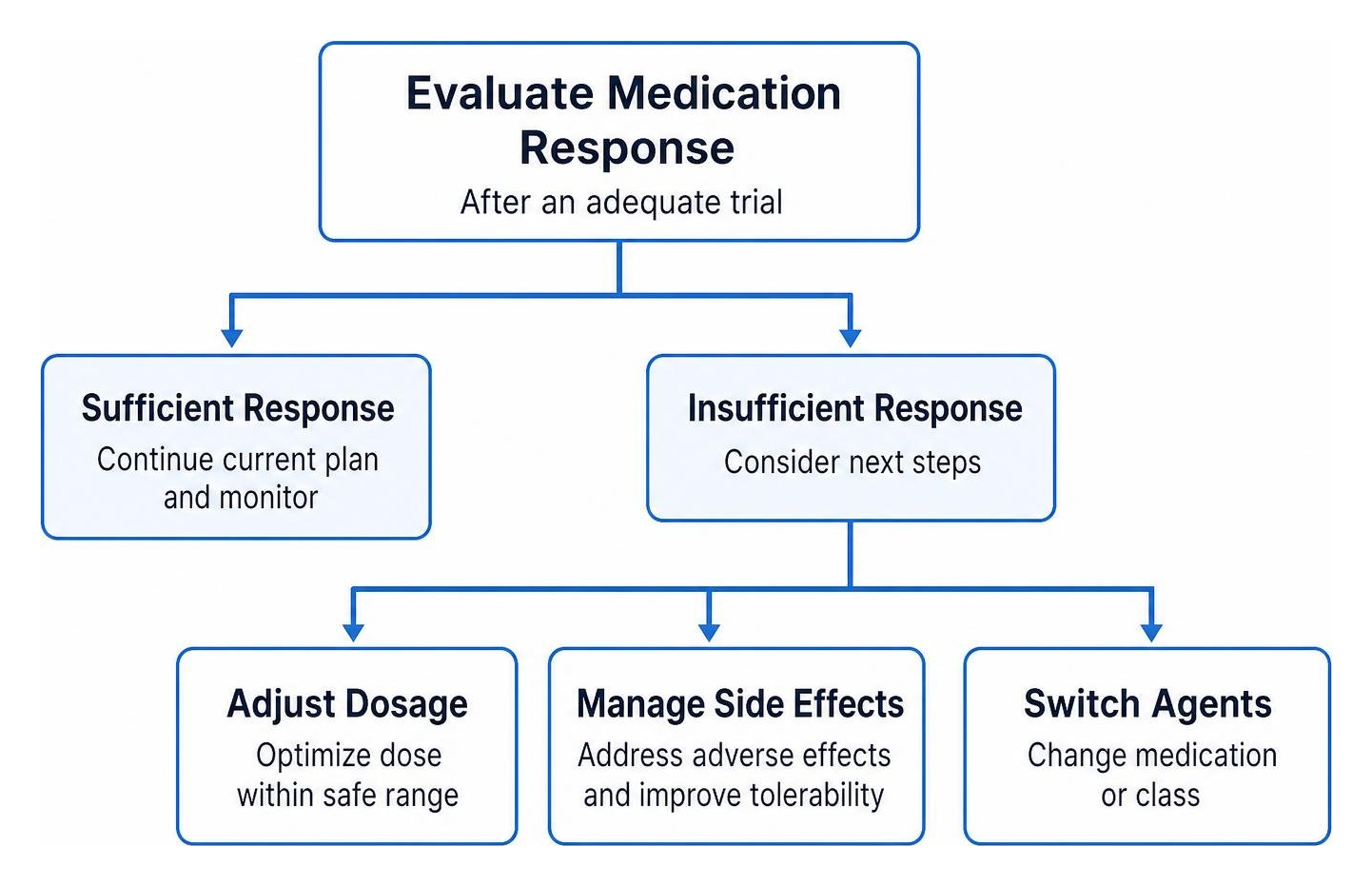
According to authoritative standards for evidence-based adult depression management, when an initial antidepressant trial does not bring sufficient relief, clinicians explore further options (NBK583074). Treatment-resistant depression is estimated to affect 30% to 60% of individuals with depression. In these situations, providers may consider switching classes, optimizing the dose, or adding an augmenting agent, such as a second-generation antipsychotic or a mood stabilizer, to improve response.
Managing MDD with Mixed or Psychotic Features
Depression can sometimes present with symptoms that extend beyond sadness or lethargy:
- Mixed features: When depression is accompanied by rapid thoughts, inner restlessness, or heightened energy, standard antidepressant monotherapy might worsen irritability. Second-generation antipsychotics or mood-stabilizing agents are often preferred to maintain balance.
- Psychotic features: In severe cases, depression may involve delusions or hallucinations, affecting at least 20% of adults hospitalized for major depression. These episodes typically require combination therapy involving both an antidepressant and an antipsychotic. In urgent or severe circumstances, specialized interventions such as electroconvulsive therapy (ECT) may be evaluated.
A careful diagnostic evaluation helps clinicians establish a safe approach to psychiatric medication management tailored to complex presentations.
Evidence-Based Protocols for Bipolar Depression, Mania, and Maintenance
Bipolar disorder involves significant shifts in mood, energy, and activity levels. More than 90% of individuals with bipolar disorder experience recurring episodes throughout life, making consistent management essential:
- Acute bipolar depression: Standard antidepressants alone can sometimes trigger manic episodes. Instead, first-line treatments include specific second-generation antipsychotics that have proven efficacy for bipolar depression while offering varying metabolic profiles.
- Acute bipolar mania: Episodes of severe mania require prompt intervention to ensure safety and restore rest. Clinicians frequently turn to mood stabilizers or second-generation antipsychotics, sometimes using combination therapy for acute stabilization.
- Bipolar I maintenance: Preventing future episodes is the cornerstone of long-term care. Ongoing maintenance therapy with mood stabilizers or second-generation antipsychotics helps maintain stability, following established psychotherapeutic medication standards.
Navigating Complexities in Psychiatric Medication Management for Adults

Finding the most effective psychiatric treatment often takes time. Recognizing why psychiatric medications require adjustment helps normalize the process of fine-tuning dosages or switching classes. When changing medications, providers use safe cross-tapering schedules to minimize withdrawal symptoms and prevent symptom recurrence.
For complex conditions such as treatment-refractory schizophrenia, specialized medications may be considered when standard antipsychotics have not provided sufficient benefit. Combining medication with evidence-based counseling is also crucial, and integrating psychotherapy skills with psychiatric medication consistently leads to better long-term outcomes than relying on medication alone.
Overcoming Medication Adherence Barriers in Serious Mental Illness
Taking medications consistently can be challenging. Common hurdles include complicated dosing schedules, side effect concerns, personal beliefs, social stigma, and difficulty navigating healthcare systems. Open discussions surrounding psychiatric medication options and risks empower individuals to voice their preferences.
For individuals with schizophrenia or bipolar disorder who struggle with daily pills or experience frequent relapses, long-acting injectable (LAI) antipsychotics offer an effective alternative. Available in both first-generation and second-generation formulations, LAIs provide steady medication levels over weeks or months, reducing the daily burden of pill-taking and supporting long-term stability.
Transitioning Young Adults to Adult Psychiatric Care
Young adults aged 18 to 25 experience the highest rates of serious mental illness, yet they receive mental health care at lower rates than older adults. Moving from pediatric or adolescent care into adult systems can feel overwhelming during this period of growing independence.
To ensure a smooth transition, providers utilize structured frameworks like the Six Core Elements of Health Care Transition:
- Transition policy: Establishing clear expectations about moving into adult care.
- Tracking and monitoring: Keeping tabs on transition milestones.
- Transition readiness: Assessing the young adult’s health literacy and self-advocacy skills.
- Transition planning: Creating emergency plans, clarifying insurance, and organizing medical records.
- Transfer of care: Coordinating directly between pediatric and adult prescribers.
- Transition completion: Confirming that the young adult is settled with their new adult care team.
Frequently Asked Questions About Adult Psychiatric Medication
How long does it take for psychiatric medications to start working?
Most psychiatric medications do not work immediately. While some calming medications provide rapid relief, most daily antidepressants and mood stabilizers require an initial period of four to six weeks at a therapeutic dose to demonstrate their full benefit. Your provider will schedule early check-ins to monitor initial response and adjust dosages safely.
What should I do if my psychiatric medication causes side effects?
If you experience uncomfortable side effects, contact your provider before making any changes. What to understand before stopping antidepressants is critical, as stopping abruptly can cause withdrawal effects or a return of symptoms. Your provider can often resolve side effects by adjusting your dose, changing the time of day you take it, or switching to an alternative medication.
How do I know if I need combination therapy or a medication change?
If your current treatment provides only partial relief after an adequate trial, your prescriber may evaluate next steps. Multiple medications may be prescribed for single conditions since combining complementary agents can target different symptoms and support fuller recovery.
Finding Adult Psychiatric Medication Support in Michigan
If you are seeking psychiatric medication management for adults, KindMind Behavioral Health is here to help. We provide compassionate, evidence-based psychiatric evaluations, medication management, and integrated therapy services across Michigan. Whether you prefer in-person visits at our locations in Rochester, Clarkston, Detroit, and across Oakland County, or the convenience of virtual telehealth appointments from anywhere in the state, our team works with you to build a care plan that fits your life.
We believe quality mental health care should be accessible. KindMind accepts most major commercial and non-commercial insurance plans, including Aetna, ASR, Blue Care Network, Blue Cross Blue Shield, Blue Cross Complete, Cigna, Cofinity/Varipro, Health Alliance Plan (HAP), Humana, McLaren, Medicaid, Medicare, Meridian, Meritain, Priority Health, TRICARE East, and UnitedHealthcare/Optum.
To take the next step in your mental health journey, book an appointment or consultation for our psychiatric medication management services today.
The information in this article is for educational purposes only and is not intended as medical or mental health advice. Individuals should consult a licensed healthcare professional regarding their specific health needs.