

Depression Outpatient Treatment Centers: Flexible Care for Sustained Healing
Depression Outpatient Treatment Centers: Flexible Care for Sustained Healing
Depression Outpatient Treatment Centers: Flexible Care for Sustained Healing
Understanding Outpatient Depression Treatment and Levels of Care
When navigating depressive disorders, knowing what level of care matches your current needs is an important first step. Outpatient care allows you to receive structured, professional mental health support while maintaining your daily life at home. Rather than staying overnight in a hospital, you attend scheduled appointments during the week and return to your usual environment. This setup allows you to practice coping strategies in real time within your home, workplace, and relationships.
Different people need different levels of structure. Understanding what the different levels of mental health care offer helps you determine whether standard weekly appointments or more structured programs will best support your recovery. For many people searching for depression outpatient treatment centers near me, the goal is to find a program that offers meaningful clinical support without requiring a residential stay.
Comparing Standard Outpatient Care and Treatment Intensity
Outpatient mental health care spans several formats, ranging from regular weekly therapy and medication visits to intensive daytime schedules.
| Care Setting | Weekly Time Commitment | Primary Focus | Everyday Flexibility |
|---|---|---|---|
| Standard Outpatient Care | 1 to 2 hours per week | Therapy, psychiatry, and medication management | High; easily fits around full-time work, school, and family routines |
| Intensive Outpatient (IOP) | 9 to 15 hours per week (often 3 days/week, 3 hours/day) | Group skills, individual counseling, and regular psychiatric monitoring | Moderate; day or evening tracks accommodate part-time work or classes |
| Partial Hospitalization (PHP) | 20 or more hours per week (usually 5 days/week, 4 to 6 hours/day) | Intensive daily stabilization, medical oversight, and structured therapies | Low; serves as a daytime bridge between inpatient care and independent living |
| Higher-Support Referrals (Inpatient) | 24/7 residential or hospital stay | Immediate crisis stabilization, safety management, and continuous observation | Full pause on daily activities to focus entirely on acute stabilization |
For many individuals living with depression, standard outpatient care provides the right balance of professional guidance, psychiatric support, and personal independence.
When Outpatient Care Is Appropriate
Outpatient treatment is suitable when you have stable housing, a baseline level of safety, and enough daily functioning to attend appointments consistently. If you can manage basic self-care, keep yourself safe between sessions, and want to address symptoms like persistent low mood, lack of energy, or sleep disruptions, outpatient care offers practical support.
However, safety always comes first. If someone experiences active thoughts of suicide, severe inability to care for their physical needs, or acute psychotic symptoms, an immediate evaluation for higher-level care is necessary. Knowing when to seek an emergency mental health evaluation ensures that safety remains the top priority during moments of acute crisis.
Crisis Support Note: If you or someone you know is in immediate distress or having thoughts of self-harm, please call or text 988 to connect with the Suicide & Crisis Lifeline, call 911, or go to the nearest emergency room.
Core Therapies and Psychiatric Services in Outpatient Settings

Effective depression treatment rarely relies on a one-size-fits-all model. Comprehensive outpatient centers combine evidence-based psychological therapies with medical psychiatric oversight to address the emotional, cognitive, and biological aspects of depressive disorders.
Evidence-Based Psychotherapy and Clinical Modalities
Psychotherapy provides practical tools to help you understand your emotional patterns, reframe self-critical thought loops, and develop sustainable habits. Commonly utilized therapeutic modalities include:
- Cognitive Behavioral Therapy (CBT): Focuses on identifying and reframing automatic negative thought patterns and behavioral avoidance that sustain depressive cycles.
- Dialectical Behavior Therapy (DBT): Teaches concrete skills in distress tolerance, emotional regulation, and mindfulness to help manage intense, overwhelming emotions.
- Motivational Interviewing: Helps clarify your personal values and strengthens internal motivation for positive life changes.
- Trauma-Informed Therapy: Addresses underlying past traumatic experiences that may fuel chronic emotional distress.
Engaging in structured individual therapy gives you a dedicated space to process challenges, build resilience, and work toward personal goals at your own pace.
Evaluating Dual Diagnosis and Co-Occurring Concerns
Depression often co-exists with other mental health challenges, such as generalized anxiety, post-traumatic stress, or substance use concerns. When individuals use alcohol or other substances to self-medicate low mood, treating only one issue often leads to recurring challenges.
Quality outpatient providers evaluate the full picture using dual-diagnosis protocols that treat mood and substance concerns collaboratively. For community-level education and regional services, exploring Oakland County’s community mental health resources can offer added local support networks for individuals and families managing co-occurring needs.
Psychiatric Medication Management and Virtual Teletherapy Options
For many individuals, combining psychotherapy with psychiatric care leads to more balanced, sustainable outcomes. Psychiatric providers, such as board-certified psychiatrists and psychiatric nurse practitioners, evaluate biological contributors to mood disorders and determine whether prescription medication may be helpful.
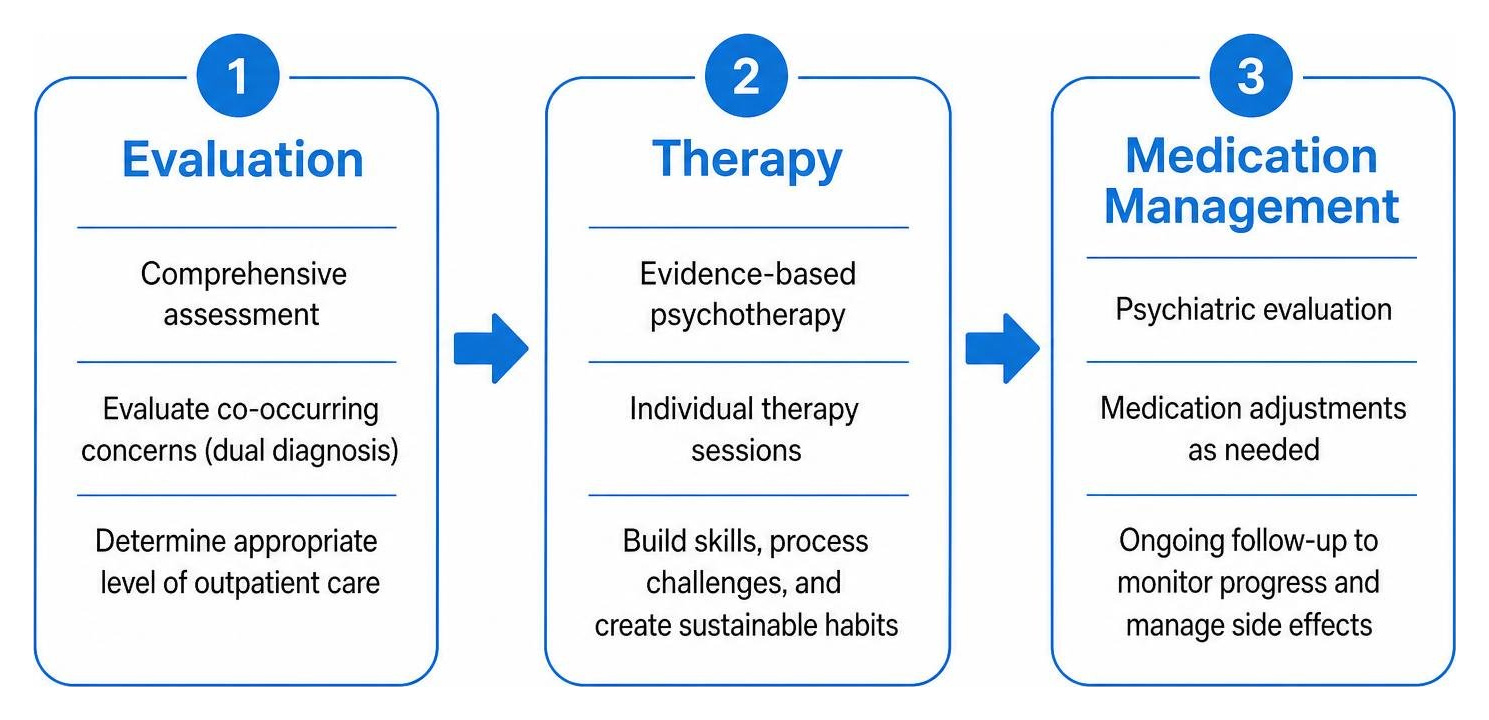
General psychiatric services and ongoing psychiatric medication management involve thoughtful initial evaluations, careful medication adjustments, and regular follow-ups to monitor symptom relief and minimize side effects. According to clinical guidance from the National Institute of Mental Health (NIMH), combining psychotherapy and psychiatric care is often one of the most effective approaches for managing moderate to severe depressive episodes.
To make care accessible, modern outpatient practices offer flexible teletherapy services alongside in-person visits. Virtual appointments allow you to connect with licensed therapists and psychiatric prescribers securely from home, eliminating commuting stress and making treatment easier to maintain during busy workweeks.
How to Choose an Outpatient Depression Program
Finding the right care team involves looking closely at clinical credentials, service models, and how well a clinic’s approach aligns with your personal life.
Taking time to explore your options ensures you receive comprehensive, coordinated support. Reviewing a guide on finding comprehensive outpatient therapy options can help you identify what matters most in a care team.
Finding Verified Providers in Michigan
When seeking outpatient care in Michigan, particularly across communities like Rochester, Clarkston, Detroit, and broader Oakland County, start by looking for established practices with licensed multidisciplinary teams.
You can verify facility credentials and explore mental health resources using confidential national databases such as the SAMHSA FindTreatment directory. When researching local centers, look for:
- State-licensed mental health professionals, including professional counselors, clinical social workers, psychologists, and psychiatric prescribers.
- An integrated care model where therapists and psychiatric prescribers communicate regularly about your treatment plan.
- Flexible options for both in-person clinic visits and secure telehealth appointments.
Questions to Ask Before Enrolling
Before your first visit, contacting the practice’s administrative or intake team can help clarify logistical details:
- Does your clinic offer both therapy and psychiatric medication management under one roof?
- Are appointments available in person, virtually, or through a hybrid format?
- How quickly can a new patient complete an intake assessment and begin sessions?
- How does your clinical team coordinate care if a patient has co-occurring anxiety or medical considerations?
- What is the procedure if a patient requires a step up or step down in care intensity?
Program Duration, Costs, and Insurance Coverage
The duration of outpatient depression care varies depending on your individual goals, symptom severity, and treatment history. Some individuals experience noticeable improvements within a few months of focused therapy, while others benefit from longer-term supportive care.
Understanding what progress looks like in depression treatment helps set realistic expectations. Early improvements might involve small shifts, such as better sleep quality or more steady daily energy, before deeper emotional patterns change. As you move toward stabilization, your care plan shifts to focus on relapse prevention planning to help you sustain progress over the long term.
Treatment Timelines and Navigating Insurance Benefits
Standard outpatient care is flexible. You may start with weekly therapy sessions and bi-weekly psychiatric check-ins, gradually spreading appointments further apart as you build confidence and stability.
Navigating insurance coverage is a common concern when seeking mental health services. Most major insurance plans provide benefits for outpatient mental health counseling and psychiatric services. KindMind Behavioral Health accepts most major commercial and non-commercial insurance plans, including:
- Aetna
- ASR
- Blue Care Network
- Blue Cross Blue Shield
- Blue Cross Complete
- Cigna
- Cofinity/Varipro
- Health Alliance Plan (HAP)
- Humana
- McLaren
- Medicaid
- Medicare
- Meridian
- Meritain
- Priority Health
- TRICARE East
- UnitedHealthcare/Optum
Before starting care, an intake coordinator can verify your coverage details to confirm your mental health benefits.
Frequently Asked Questions About Outpatient Depression Care
Can I continue working or attending school during outpatient depression treatment?
Yes. One of the main advantages of standard outpatient treatment is its flexibility. Appointments can typically be scheduled during daytime or early evening hours, or completed via telehealth, allowing you to attend work, classes, or care for family members without disruption.
How quickly can I begin treatment after an initial evaluation?
At many outpatient practices, the admissions process begins with a brief phone screening followed by a comprehensive clinical intake assessment. Depending on provider availability, patients can often schedule their initial therapy or psychiatric evaluation within a few days to a week.
What happens if outpatient depression treatment is not enough?
If your symptoms worsen or weekly sessions do not provide enough support, your care team will discuss adjusting your treatment plan. This may include increasing appointment frequency, modifying psychiatric medications, or coordinating a referral to intensive outpatient programs (IOP), partial hospitalization programs (PHP), or inpatient care.
Conclusion
Recovery from depression is a personal journey, but you do not have to navigate it on your own. Outpatient care offers a structured, supportive environment where you can work through challenges, build coping skills, and receive expert psychiatric guidance while continuing your everyday life.
At KindMind Behavioral Health, we offer compassionate, evidence-based care tailored to your unique situation. Serving individuals and families across Rochester, Clarkston, Detroit, and Oakland County, our team provides integrated individual therapy, couples and family counseling, adolescent support, and comprehensive psychiatric medication management. With both in-person and flexible virtual telehealth options available throughout Michigan, finding the right care for your needs is accessible and straightforward.
Take the first step toward lasting wellness today. Schedule an appointment or psychiatric consultation with the KindMind team to begin your personalized care plan.
The information in this article is for educational purposes only and is not intended as medical or mental health advice. Individuals should consult a licensed healthcare professional regarding their specific health needs.