

In Depth Guide to Psychiatric Medication Management Services
In Depth Guide to Psychiatric Medication Management Services
In Depth Guide to Psychiatric Medication Management Services
What Psychiatric Medication Management Services Can Do for You
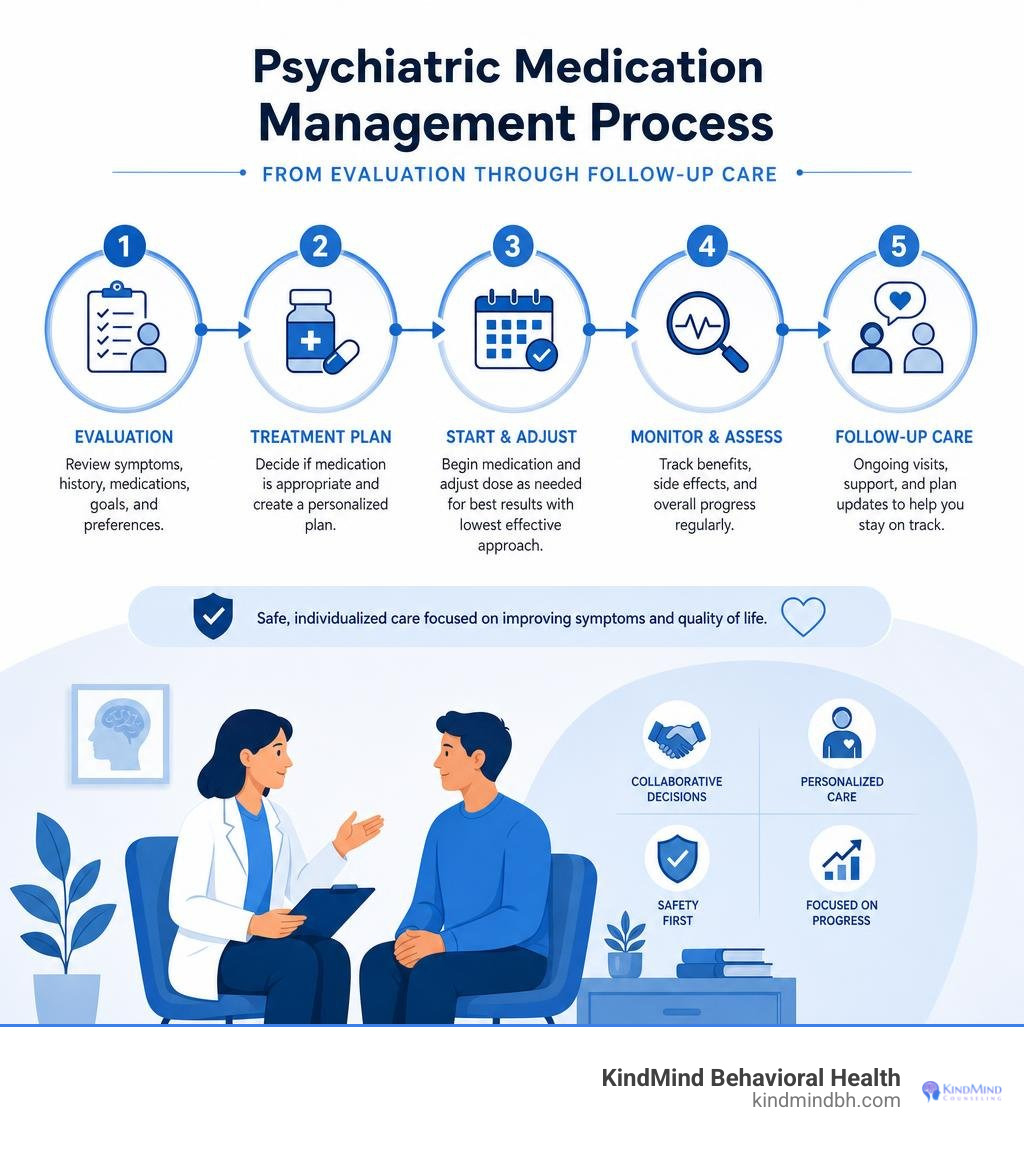
Psychiatric medication management services help people find, use, and safely adjust mental health medication when symptoms such as anxiety, depression, ADHD, bipolar disorder, or trauma disrupt daily life. Care starts with a detailed evaluation, then continues through regular follow-ups to track benefits, side effects, dosage needs, and overall progress.
A qualified psychiatrist or Psychiatric Mental Health Nurse Practitioner (PMHNP) does more than write prescriptions. They consider your symptoms, health history, current medications, treatment goals, and preferences before recommending a plan. If medication is appropriate, the goal is to improve symptoms while using the lowest effective approach and watching closely for unwanted effects.
Medication is often one part of care, not the whole plan. Many people benefit from combining psychiatric treatment with therapy, better sleep, stress support, movement, and healthier routines. Visits may be available in person or through telehealth, depending on your needs, location, insurance, and the medication involved.
At KindMind Behavioral Health, our integrated care model includes therapy and psychiatric medication management services for adults, children, and families. Our focus is personalized, professional care with flexible virtual and in-person options, helping patients move from uncertainty toward a treatment plan they can understand and follow.
Understanding Psychiatric Medication Management Services and How They Work
Psychiatric medication management is a specialized medical service centered on evaluating, prescribing, monitoring, and optimizing pharmacological treatments for behavioral and mental health conditions. As emphasized by the National Institute of Mental Health, mental health medications can play an essential role in reducing symptoms and supporting long-term recovery when properly supervised. While general healthcare providers frequently write basic prescriptions for mental health concerns, specialized psychiatric care offers a deeper clinical lens.
Psychiatrists are medical doctors (MDs or DOs) who have completed extensive medical school and multi-year psychiatric residency training. Alongside board-certified Psychiatric Mental Health Nurse Practitioners (PMHNPs), they possess advanced training in psychopharmacology, neurobiology, and complex differential diagnosis. This advanced medical foundation allows psychiatric prescribers to navigate intricate drug interactions, nuanced symptom presentations, and physiological comorbidities that primary care settings may not have the dedicated time to explore.
Understanding therapy vs primary care vs psychiatry for mental health services is often the first step in getting targeted relief. While primary care physicians offer vital initial screenings and therapists deliver essential psychological interventions, psychiatric clinicians specialize directly in tailoring neurochemical support. When symptoms begin interfering with work, relationships, or physical health, recognizing Why You Should Not Postpone Medication Management for Your Mental Health can prevent prolonged distress and acute escalation.
Conditions Treated and Clinical Indications
Specialized psychiatric medication management supports individuals navigating a broad spectrum of moderate to severe psychological conditions, including:
- Major Depressive Disorder (MDD) and Persistent Depressive Disorders: Targeting persistent low mood, anhedonia, fatigue, and cognitive slowing.
- Generalized Anxiety Disorder, Panic Disorder, and Social Anxiety: Calming baseline nervous system hyperactivity and reducing severe panic episodes.
- Bipolar I and Bipolar II Disorders: Stabilizing mood swings between depressive lows and manic or hypomanic highs.
- Attention-Deficit/Hyperactivity Disorder (ADHD): Improving executive function, working memory, impulse control, and sustained attention.
- Post-Traumatic Stress Disorder (PTSD) and Acute Stress Responses: Managing hyperarousal, intrusive thoughts, nightmares, and chronic somatic tension.
- Obsessive-Compulsive Disorder (OCD): Decreasing intrusive obsessive thoughts and easing compulsive behaviors.
Despite clinical evidence supporting pharmacological interventions, many individuals hesitate due to social misconceptions. Unpacking The Mental Health Medication Stigma helps normalize psychopharmacological support as an evidence-based medical tool—comparable to using insulin for diabetes or antihypertensives for cardiovascular health.
Key Medication Classes and Their Therapeutic Mechanisms
Psychiatric medications work by modulating specific neurotransmitter systems in the central nervous system, including serotonin, dopamine, norepinephrine, and gamma-aminobutyric acid (GABA). Prescribers select specific classes based on symptom profile, medical history, and pharmacodynamics:
- Antidepressants: Commonly prescribed for mood and anxiety disorders. Learning about SSRIs vs SNRIs and their differences reveals how Selective Serotonin Reuptake Inhibitors (SSRIs) and Serotonin-Norepinephrine Reuptake Inhibitors (SNRIs) alter neurotransmitter availability to improve mood regulation and stress resilience.
- Mood Stabilizers: Medications like lithium and anticonvulsants (e.g., lamotrigine, valproic acid) help regulate neuronal excitability and prevent cyclic mood episodes.
- Atypical Antipsychotics (Second-Generation Antipsychotics): Utilized for bipolar disorder, schizophrenia, and as augmenting agents for treatment-resistant depression to modulate dopamine and serotonin pathways.
- Stimulants and Non-Stimulants: Examining the Facts About Stimulant Medications to Clear Common Misconceptions clarifies how methylphenidate and amphetamine compounds safely enhance dopamine and norepinephrine transmission to support executive functioning.
- Anxiolytics: Agents such as buspirone or short-term adjunctive medications designed to ease physical and cognitive anxiety symptoms.
When patients ask “Are Psychiatric Medications Safe“, psychiatric prescribers emphasize that clinical safety relies on medical supervision, gradual dosing, and regular reviews to balance symptom control against side effects.
The Psychiatric Care Lifecycle: Evaluation, Titration, and Maintenance

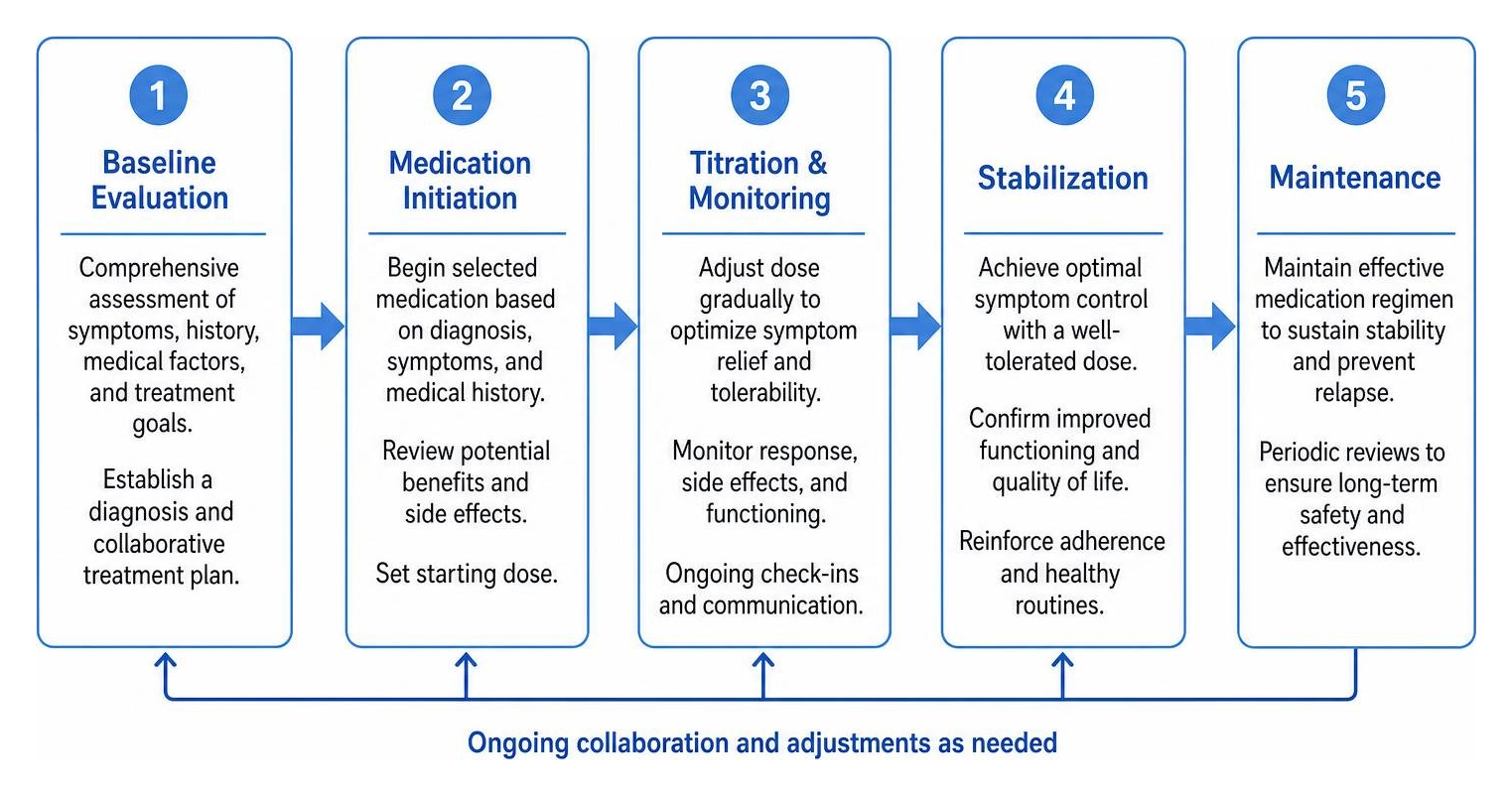
Navigating psychiatric care is an ongoing medical collaboration rather than a one-time transaction. At KindMind Behavioral Health, our structured psychiatric care lifecycle guarantees patient safety, therapeutic precision, and sustained well-being through dedicated Psychiatric Medication Management.
What to Expect During Psychiatric Medication Management Services
The journey starts with an initial diagnostic evaluation, usually lasting 45 to 60 minutes. Knowing What a Psychiatric Evaluation Looks Like helps ease pre-appointment anxiety.
During this session, your clinician conducts a full assessment covering:
- Current Symptoms: Onset, duration, triggers, and functional impact across daily life.
- Psychiatric and Biological History: Past episodes, previous treatment responses, and family history of psychiatric conditions.
- Medical Baseline & Laboratory Testing: Reviewing thyroid panels, metabolic baselines, nutritional markers, and current somatic medications.
- Personal Goals and Preferences: Discussing lifestyle demands, recovery goals, and any concerns regarding side effects.
Understanding Why Your Psychiatry Provider Chose That Medication and what goes into the decision illustrates that prescribing is a customized process matching your biochemical needs with the right clinical profile. Clinicians also review safety protocols, highlighting Why Medication Instructions Matter and the importance of understanding drug interactions with other prescriptions, over-the-counter supplements, or food.
Ongoing Monitoring, Dosage Adjustments, and Long-Term Stability
Starting a psychiatric prescription is just the beginning. Effective care requires ongoing clinical assessment because Medication Management Is More Than a Refill. Routine appointments track therapeutic responses, side-effect tolerance, vital signs, and psychological progress.
Finding an effective medication regimen takes patience. Recognizing Why Finding the Right Mental Health Medication Is a Process and Why Psychiatric Medications can Take Time to Work helps set realistic expectations, as neurochemical adaptations often take several weeks.
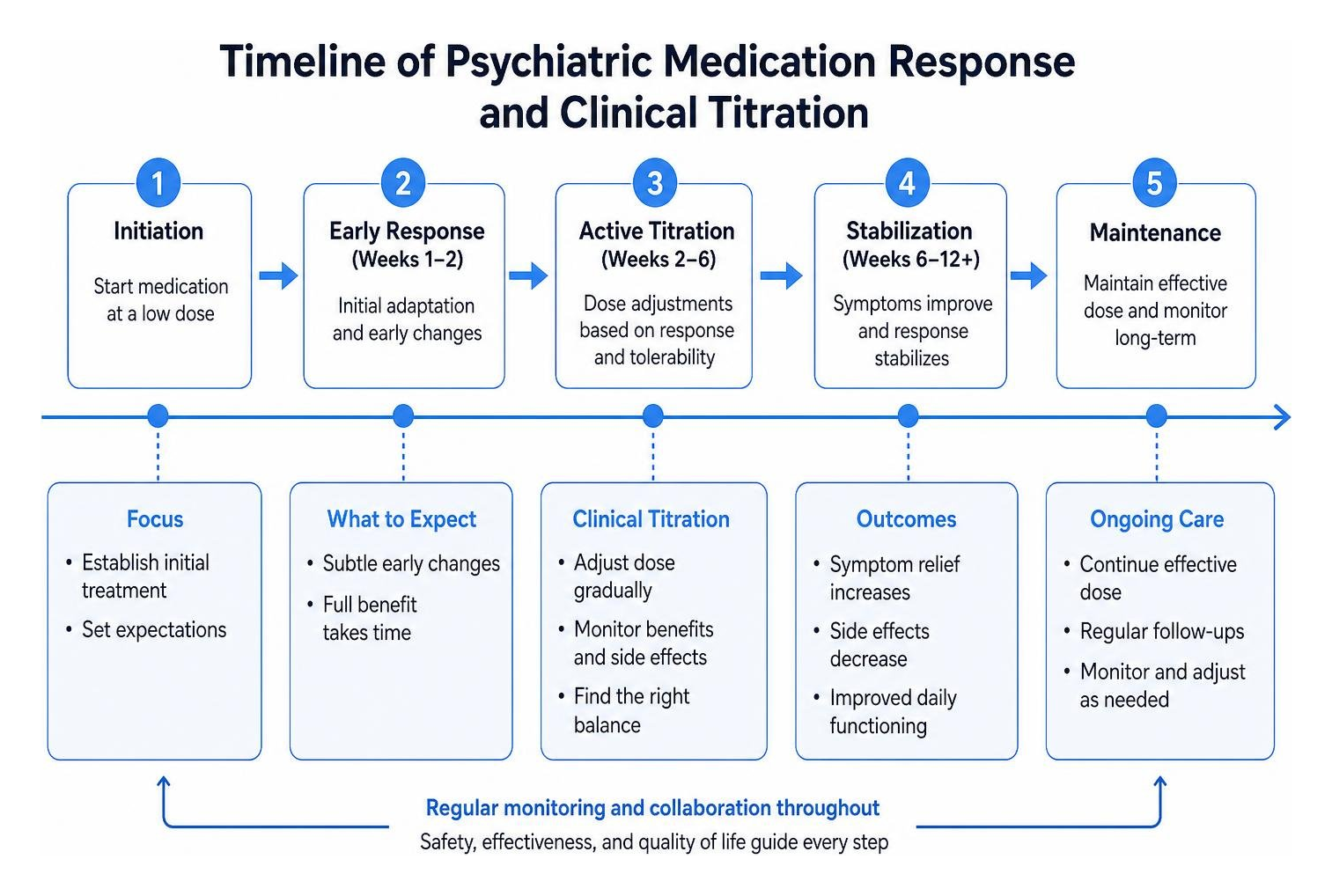
Over time, your treatment may need fine-tuning. Understanding Why Mental Health Medication Adjustments Can Be Part of the Process and Why Your Psychiatric Medication Might Need to Change Even If It Was Working helps explain how hormonal changes, life stressors, or natural tolerance can prompt dosage updates. In some complex cases, a provider might recommend combination therapy; or exploring Taking More Than One Medication for the Same Mental Health Condition shows how synergistic agents can address distinct symptom clusters simultaneously. Once you achieve balance, Maintenance Treatment in Behavioral Health and Psychiatry protects against symptom recurrence and supports long-term recovery.
Integrated Care: Combining Medication, Psychotherapy, and Lifestyle

At KindMind Behavioral Health, we believe psychopharmacology is most effective within an integrated, multimodal care plan. Medication can restore neurochemical balance and ease severe distress, creating the emotional bandwidth needed to engage in psychotherapy and build daily coping tools.
Focusing on Combining Mental Health Therapy Skills With Medication Treatment creates a strong clinical synergy. Cognitive Behavioral Therapy (CBT), Acceptance and Commitment Therapy (ACT), and mindfulness approaches help reframe negative thinking, process unresolved trauma, and build emotional resilience, addressing root causes that medication alone cannot solve.
Furthermore, biological treatments work best alongside healthy daily habits. Recognizing that Medication Is Just One Element of the Approach and Why a Healthy Lifestyle Matters for Mental Health reminds us of the power of core wellness practices:
- Sleep Hygiene: Establishing consistent circadian rhythms to support neurotransmitter replenishment and mood stability.
- Nutritional Support: Fueling gut-brain axis communication with balanced nutrition and steady hydration.
- Physical Activity: Using regular movement to stimulate natural endorphins, brain-derived neurotrophic factor (BDNF), and dopamine regulation.
- Stress Management and Social Connection: Building community support to reduce systemic inflammation and cortisol spikes.
This comprehensive approach forms the foundation for Relapse Prevention in Therapy and Psychiatry, helping you maintain lasting wellness.
Choosing the Right Provider, Care Setting, and Accessibility Options
Selecting the right psychiatric provider is a major step in your mental health care. You need a qualified prescriber whose clinical focus, communication style, and care philosophy align with your goals.
Reviewing How to Choose the Best Psychiatric Prescriber for You and Finding a Mental Health Therapist or Psychiatrist can guide your search. Consider whether you need a general psychiatric prescriber or someone with specialized training in areas like child and adolescent psychiatry, perinatal mental health, or addiction medicine.
It is equally important to understand the Different Levels of Mental Health Care and Finding the Right Support for You. Standard outpatient psychiatric services are ideal for mild to moderate challenges, while intensive outpatient programs (IOP) or partial hospitalization programs (PHP) provide greater support during acute crises. When evaluating clinics, verify insurance coverage, out-of-network benefits, copays, and sliding-scale options to ensure your care remains sustainable.
In-Person vs. Telehealth Psychiatric Medication Management Services
Today’s mental health landscape offers flexible care models across both digital and clinical settings. Telehealth has expanded access to specialized psychiatric care, allowing patients to attend appointments securely from home.
| Care Setting Factor | In-Person Psychiatric Visits | Telehealth Psychiatric Visits |
|---|---|---|
| Best Suited For | Severe symptom presentations, complex diagnostic exams requiring in-person observation, or patients lacking private home spaces. | Stable follow-ups, routine medication reviews, initial consultations, and busy working professionals or students. |
| Accessibility & Convenience | Requires travel, parking, and clinic waiting times; limited by your immediate geography. | Eliminates travel barriers; attend appointments from home or work with flexible scheduling. |
| Physical Monitoring | Direct, on-site checks for blood pressure, weight, movement symptoms, and metabolic markers. | Uses local laboratory orders, home monitoring devices (e.g., smart blood pressure cuffs), and self-reported metrics. |
| Comfort & Environment | Structured clinical setting outside the home, which some patients prefer for clear boundaries. | Familiar home environment, which can lower pre-appointment anxiety and ease open communication. |
For virtual care, reviewing A Quick Start Guide to Reliable Online Psychiatric Evaluations shows how secure, HIPAA-compliant platforms deliver the same diagnostic depth and clinical care as traditional office visits.
Frequently Asked Questions About Medication Management
How long does it take for psychiatric medications to start working?
Psychiatric medications do not work overnight. While fast-acting medications like stimulant treatments for ADHD or certain anxiolytics provide quick symptom relief, most daily psychiatric medications (such as SSRIs, SNRIs, and mood stabilizers) require an initial therapeutic window of 2 to 6 weeks. During this time, the brain gradually adjusts its receptor sensitivity and downstream signaling pathways. Your prescriber will schedule follow-up appointments during these early weeks to monitor your progress and make gradual dosage adjustments safely.
Can I stop taking my psychiatric medication once my symptoms improve?
No, you should never stop or change your psychiatric medication without direct medical guidance. Feeling better often means the medication is working as intended. Stopping abruptly can cause uncomfortable discontinuation symptoms, rebound anxiety, or a return of the original illness. When you are ready to adjust your treatment, your provider will guide you through a safe tapering process, as outlined in Can You Stop Taking Antidepressants? What You Should Know Before Making a Decision.
What questions should I ask during an initial psychiatric consultation?
To get the most out of your first evaluation, bring a list of clear, practical questions for your provider:
- Why are you recommending this specific medication over alternative options?
- What are the most common initial side effects, and how should I manage them if they occur?
- How long will it take before we know if this dose is effective?
- What should I do if I miss a dose or experience an unexpected physical reaction?
- How do your clinic protocols handle after-hours questions, urgent concerns, and prescription refills?
Conclusion
Navigating mental health challenges can feel overwhelming, but you do not have to manage it alone. Psychiatric medication management is a collaborative, evidence-based medical service designed to help you regain stability, clarity, and daily well-being. By combining diagnostic precision, careful dosage adjustments, and ongoing clinical oversight with psychotherapy and healthy lifestyle routines, medication can serve as a dependable foundation for lasting recovery.
At KindMind Behavioral Health, we provide compassionate, patient-centered psychiatric care tailored to your unique biological and personal needs. Whether you are looking for an initial evaluation, a second opinion on your current treatment, or integrated therapy and psychiatry, our team offers flexible virtual and in-person appointments to support your journey. Visit KindMind Behavioral Health today to connect with a psychiatric provider and take the next step toward balanced mental wellness.
The information in this article is for educational purposes only and is not intended as medical or mental health advice. Individuals should consult a licensed healthcare professional regarding their specific health needs.