

What Every Nursing Mother Needs to Know About Anxiety Medication and Breastfeeding
What Every Nursing Mother Needs to Know About Anxiety Medication and Breastfeeding
What Every Nursing Mother Needs to Know About Anxiety Medication and Breastfeeding
Evaluating Anxiety Medication Breastfeeding Safety: How Drugs Pass into Milk
Most first-line anxiety medications transfer into breast milk in minimal amounts and are generally considered safe and compatible with breastfeeding. For nursing parents managing postpartum anxiety, effective psychiatric treatment rarely requires weaning or choosing between your emotional health and feeding your baby.
Understanding how medication moves into your milk helps take away much of the fear surrounding treatment. When you take a medication, it breaks down in your digestive tract, enters your bloodstream, and a small percentage may diffuse across the cellular barrier into your breast milk.
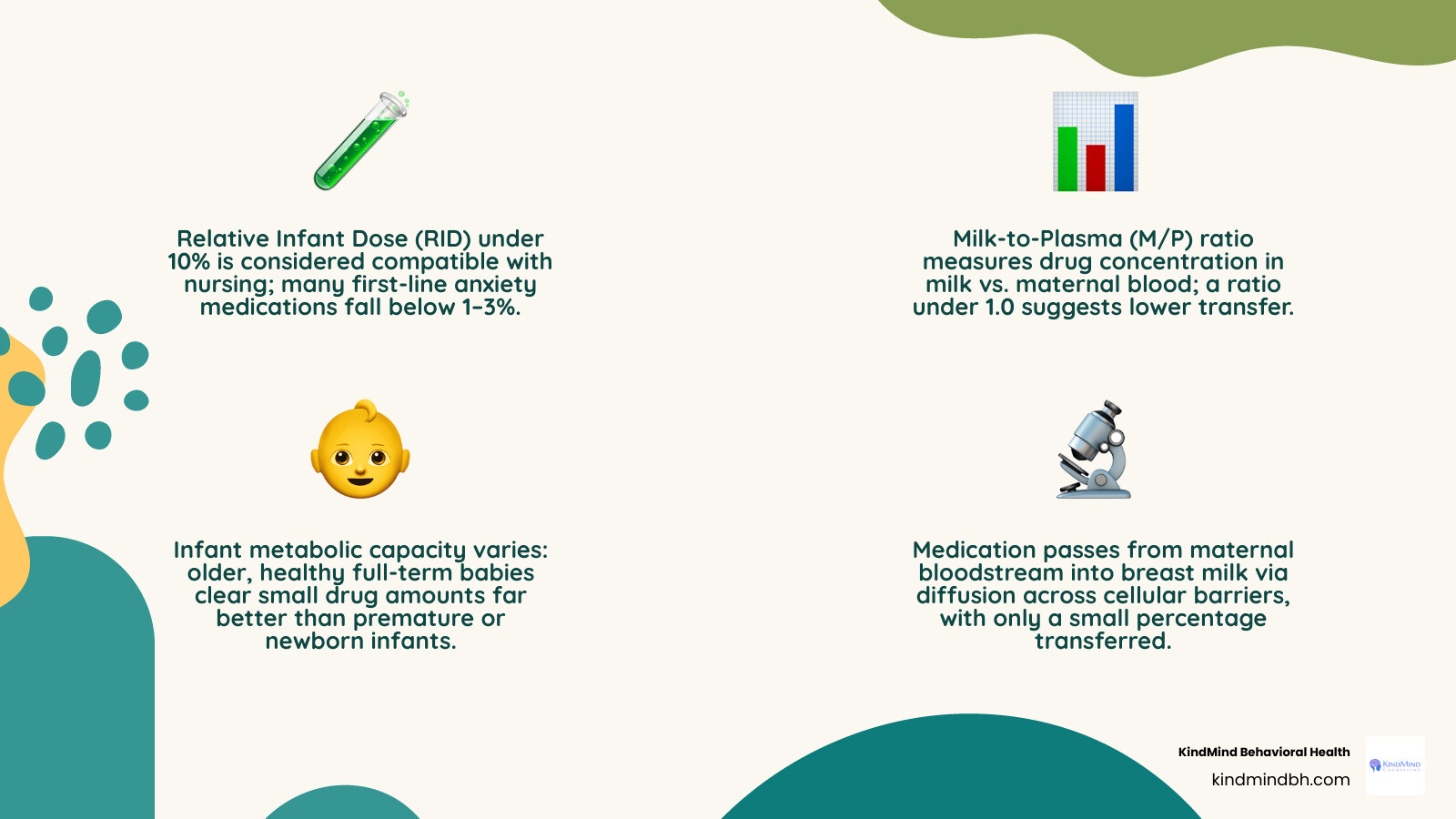
Clinicians and researchers look at several key pharmacological factors to assess the safety of an anxiety medication breastfeeding plan:
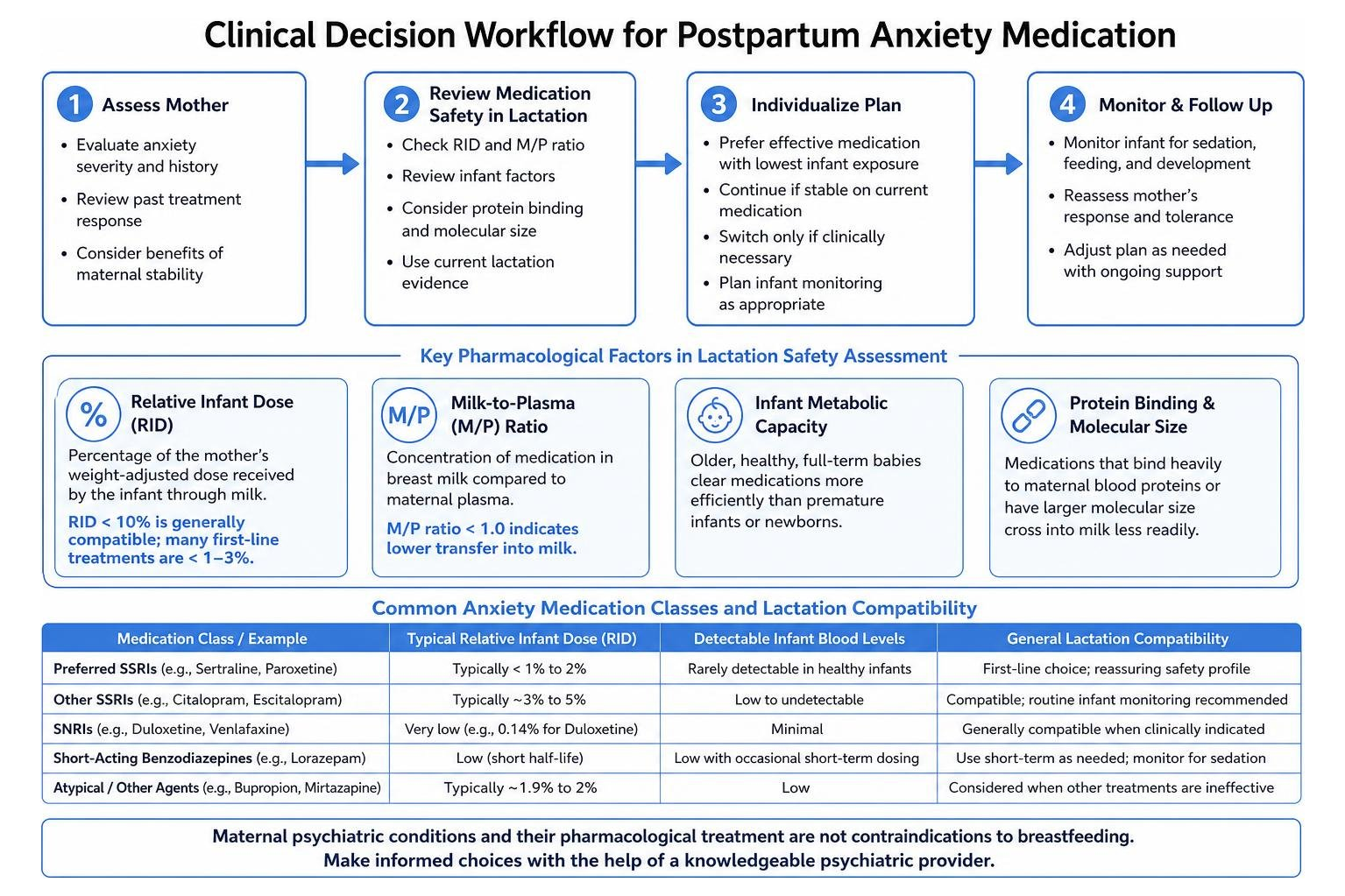
- Relative Infant Dose (RID): This is the percentage of the mother’s weight-adjusted dose that the nursing infant receives through milk. As a general clinical rule of thumb, an RID under 10% is considered compatible with nursing, and many first-line treatments fall well below 1% to 3%.
- Milk-to-Plasma (M/P) Ratio: This measures the concentration of the medication in breast milk compared to maternal blood plasma. While a ratio under 1.0 indicates lower transfer into milk, overall infant dose matters most.
- Infant Metabolic Capacity: Older, healthy, full-term babies metabolize and clear small amounts of medication much more efficiently than premature infants or newborns in their first weeks of life.
- Protein Binding and Molecular Size: Medications that bind heavily to maternal blood proteins have a harder time crossing into breast milk.
According to the scientific consensus on lactation pharmacology, maternal psychiatric conditions and their pharmacological treatment are not contraindications to breastfeeding. Instead of guessing or abruptly weaning, parents can make informed choices with the help of a knowledgeable psychiatric provider.
| Medication Class / Example | Typical Relative Infant Dose (RID) | Detectable Infant Blood Levels | General Lactation Compatibility |
|---|---|---|---|
| Preferred SSRIs | Typically < 1% to 2% | Rarely detectable in healthy infants | First-line choice; reassuring safety profile |
| Other SSRIs | Typically ~3% to 5% | Low to undetectable | Compatible; routine infant monitoring recommended |
| SNRIs | Very low | Minimal | Generally compatible when clinically indicated |
| Short-Acting Benzodiazepines | Low (short half-life) | Low with occasional short-term dosing | Use short-term as needed; monitor for sedation |
| Atypical / Other Agents | Typically ~1.9% to 2% | Low | Considered when other treatments are ineffective |
Safest Anxiety and Antidepressant Options for Nursing Mothers
When discussing mental health treatment with nursing mothers, we evaluate the big picture. If you took a medication during pregnancy that kept you healthy, stable, and calm, staying on that medication is often the safest path. Switching medications during the fragile postpartum transition can trigger symptom recurrence or unnecessary side effects.
If you are beginning care postpartum, having open conversations about psych medicine and treatment safety can give you confidence in your care plan.
First-Line SSRIs and Anxiety Medication Breastfeeding Compatibility
Selective Serotonin Reuptake Inhibitors (SSRIs) are the most studied and commonly prescribed medications for perinatal anxiety and mood conditions.
- Preferred SSRIs: Some SSRI medications are frequently recommended as first-line agents for nursing mothers. Peer-reviewed research, such as the LactMed safety data on preferred SSRIs, highlights that certain SSRIs transfer into breast milk in minimal amounts. In clinical studies of nursing pairs, infant blood levels are usually undetectable, and adverse effects in full-term infants are exceedingly rare.
- Low-Transfer SSRIs: Other SSRI options also show remarkably low passage into breast milk. As documented in the research on low-transfer SSRIs during lactation, some medications produce very low infant exposure, with the vast majority of tested infants having no measurable drug in their system.
When evaluating your symptoms, a psychiatric professional will help you weigh your choices, such as comparing SSRI’s with SNRI’s, to match your exact emotional and physical profile.
Other Antidepressants, TCAs, and Atypical Options
Other medication families can also be used during lactation when appropriate:
- Other SSRIs: While slightly higher amounts of some SSRI medications cross into breast milk compared to preferred first-line options, the clinical data on additional SSRI options indicates an estimated infant exposure of roughly 3% to 4% of the mother’s weight-adjusted dose. These are generally considered compatible with nursing, especially if a mother responded well to them in the past.
- Tricyclic Antidepressants (TCAs): Some medications in this class have documented safety histories with low infant exposure.
- SNRIs and Atypical Antidepressants: Serotonin-norepinephrine reuptake inhibitors and other atypical options are alternatives when SSRIs are not the right fit. A broad overview of antidepressant safety during breastfeeding demonstrates that most common antidepressants can be used safely without disrupting lactation.
Benzodiazepines and Short-Term Anxiolytics
Benzodiazepines are sometimes used for acute, severe panic or disabling insomnia. When nursing, these medications require extra thought because they can cause drowsiness or poor feeding in young babies.
- Short Half-Life Agents: If a benzodiazepine is necessary, clinicians generally prefer short-acting medications. They leave the body quickly and do not build up active metabolites.
- Longer-Acting Medications: Medications with longer half-lives or active metabolites can accumulate in an infant’s system over time. For example, clinical lactation safety data suggests that while a single occasional dose is generally safe, repeated use in newborns warrants careful monitoring for infant sedation and sluggish feeding.
Risks of Untreated Maternal Anxiety vs. Medication Exposure
It is natural to worry about how a medication might affect your infant. However, leaving maternal anxiety untreated carries clear, measurable risks for both you and your baby.
Severe, chronic postpartum anxiety can make bonding difficult, interfere with sleep routines, decrease appetite, and trigger early, unwanted weaning due to stress or perceived milk supply issues. Furthermore, unaddressed perinatal anxiety can increase the risk of developing postpartum depression, which affects up to 14.5% of new mothers. Reviewing our practical Guide to Mental Health Medication Options and Risks can help you weigh these factors with clarity and self-compassion.
Holistic and Non-Medication Coping Strategies
Medication is one valuable tool, but it is rarely the only one. Combining psychiatric care with practical coping habits creates a strong foundation for recovery:
- Evidence-Based Psychotherapy: Cognitive Behavioral Therapy (CBT) and Acceptance and Commitment Therapy (ACT) help you identify and reframe catastrophic worries, health hypervigilance, and intrusive thoughts. Discover more about combining therapy skills with medication for long-term emotional resilience.
- Protected Sleep Blocks: Sleep deprivation directly fuels anxiety pathways in the brain. Arranging for a partner, family member, or postpartum doula to handle one overnight feeding using pumped milk or formula can give you a 4-hour stretch of restorative rest.
- Mindfulness and Grounding: Simple breathing exercises during feeding sessions stimulate the vagus nerve, calming your heart rate and easing tension.
- Community and Connection: Joining postpartum support groups helps normalize the reality that parenting is hard, and you do not have to carry the mental load alone.
When to Start Anxiety Medication Breastfeeding Treatment: Signs You Need Help
It is normal to feel occasional worry as a new parent. However, you should consider professional psychiatric support if you notice:
- Excessive worry or dread that lasts most of the day for two weeks or more
- Intrusive, frightening thoughts that feel difficult to dismiss
- Physical symptoms such as a racing heart, chest tightness, constant stomach upset, or shaking
- Panic attacks that occur without warning
- Inability to sleep even when your baby is sleeping peacefully
- Constant checking behaviors (e.g., checking the baby’s breathing every few minutes)
If you are trying to understand what you are experiencing, our guide to recognizing when to seek anxiety treatment can help clarify your symptoms.
Crisis Disclaimer: If you or someone you know is experiencing acute crisis, thoughts of self-harm, or severe emotional distress, please know you are not alone. Immediate support is available 24/7. Call or text 988 to reach the Suicide & Crisis Lifeline, or go to the nearest hospital emergency room.
Frequently Asked Questions About Anxiety Medication and Breastfeeding
Can I breastfeed immediately after taking my anxiety medication?
In most cases, you do not need to time your nursing sessions around your medication schedule. For once-daily medications, taking your dose immediately after a nursing session or right before your baby’s longest expected sleep stretch naturally minimizes exposure during peak blood levels. Pumping and dumping is rarely necessary for standard daily antidepressants.
Which anxiety medication has the lowest transfer into breast milk?
Certain SSRI medications consistently demonstrate the lowest transfer into breast milk among selective serotonin reuptake inhibitors, with relative infant doses typically below 1% and non-detectable serum levels in healthy infants. A KindMind provider can help you understand which options may be most appropriate for your situation.
What infant side effects should I watch for while taking anxiety meds?
While side effects are uncommon with first-line medications, you should observe your baby for:
- Unusual drowsiness or difficulty waking for feeds
- Weak suckling or poor feeding
- Noticeable changes in weight gain patterns
- Irritability or extreme fussiness
If you observe any of these signs, contact your pediatrician and your psychiatric prescriber to review the plan.
Conclusion: Empowering Your Mental Health and Nursing Journey
You deserve to feel well, present, and supported while caring for your baby. Taking care of your mental health is an act of care for your whole family. With modern psychiatric care, you do not have to choose between your mental stability and your breastfeeding goals.
At KindMind Behavioral Health, we walk alongside you with compassionate, individualized care. We serve individuals and families across Michigan, including Rochester, Clarkston, Detroit, and Oakland County, offering both in-person sessions and flexible telehealth appointments throughout the state.
Our team specializes in integrated care, providing therapy alongside comprehensive psychiatric medication management services tailored to perinatal and postpartum needs. We accept most major commercial and non-commercial insurance plans, including Aetna, ASR, Blue Care Network, Blue Cross Blue Shield, Blue Cross Complete, Cigna, Cofinity/Varipro, Health Alliance Plan (HAP), Humana, McLaren, Medicaid, Medicare, Meridian, Meritain, Priority Health, TRICARE East, and UnitedHealthcare/Optum.
If you are navigating postpartum anxiety and want clear, evidence-based guidance, reach out to us. We invite you to schedule an appointment with KindMind Behavioral Health today so we can support you on your path to wellness.
The information in this article is for educational purposes only and is not intended as medical or mental health advice. Individuals should consult a licensed healthcare professional regarding their specific health needs.