

The Complete Guide to Effective Couples Counseling
The Complete Guide to Effective Couples Counseling
The Complete Guide to Effective Couples Counseling
Couples Counseling: When to Start and What to Expect
Couples counseling helps partners understand what’s not working and practice new ways to talk, listen, and handle conflict. You do not need to wait for a crisis. If the same arguments keep coming back, trust has been hurt, or you feel more like roommates than partners, it may be time to seek support.
Start by looking for a therapist who works with couples and has experience with your concerns. In the first sessions, you can expect to discuss your relationship history and set goals together. Many couples notice changes within 8 to 12 sessions, though the pace varies.
KindMind Behavioral Health offers couples therapy in Michigan, in person or by telehealth. We accept most major commercial and non-commercial insurance plans; check your plan’s coverage for couples counseling before booking.

Couples counseling terms to remember:
How Effective Couples Counseling Transforms Modern Relationships
Navigating long-term commitment in our busy world is rarely simple. Modern couples balance heavy work schedules, household demands, financial planning, and parenting duties, often leaving little emotional bandwidth for each other. Over time, healthy partnerships can drift into silent disconnection or high-stress conflict cycles.
Clinical data shows that approximately 20% of all married couples experience significant relationship distress at any given time, and around 40% of marriages in the United States eventually end in divorce. These numbers do not mean partnerships are doomed to fail; rather, they highlight how common relational strain really is.
Relationship challenges rarely stem from a lack of love. More often, they arise from communication breakdowns, unaddressed individual stressors, or unspoken expectations. When underlying mental health concerns, such as generalized anxiety, chronic depression, or adult attention issues, enter the dynamic, everyday stress multiplies. At KindMind Behavioral Health, our team looks at relational health through an integrated lens. We understand that emotional connection, lifestyle habits, and psychiatric wellness all interact to shape how you and your partner experience each other every day.
Common Signs Your Partnership Needs Guidance
It is easy to normalize tension when it develops slowly. Many couples assume constant bickering or emotional distance is just an unavoidable part of adulthood. However, certain clear signs suggest your relationship could benefit from external professional support:
- The same arguments on repeat: You find yourselves fighting over the same chores, parenting decisions, or financial habits without ever reaching a real solution.
- The roommate dynamic: You manage your household like efficient business partners, but emotional intimacy, laughter, and physical affection have faded.
- Walking on eggshells: One or both of you feels the need to hide honest thoughts or feelings to avoid explosive reactions or stony silence.
- Escalating emotional distance: You stop sharing your daily hopes, worries, or vulnerabilities because it feels safer to keep them to yourself.
- Trust injuries or betrayal: Infidelity, hidden spending, or broken promises have created lingering resentment that you cannot move past alone.
- Overwhelming life transitions: Welcoming a new child, navigating career changes, caring for aging parents, or managing health challenges strains your mutual coping tools.
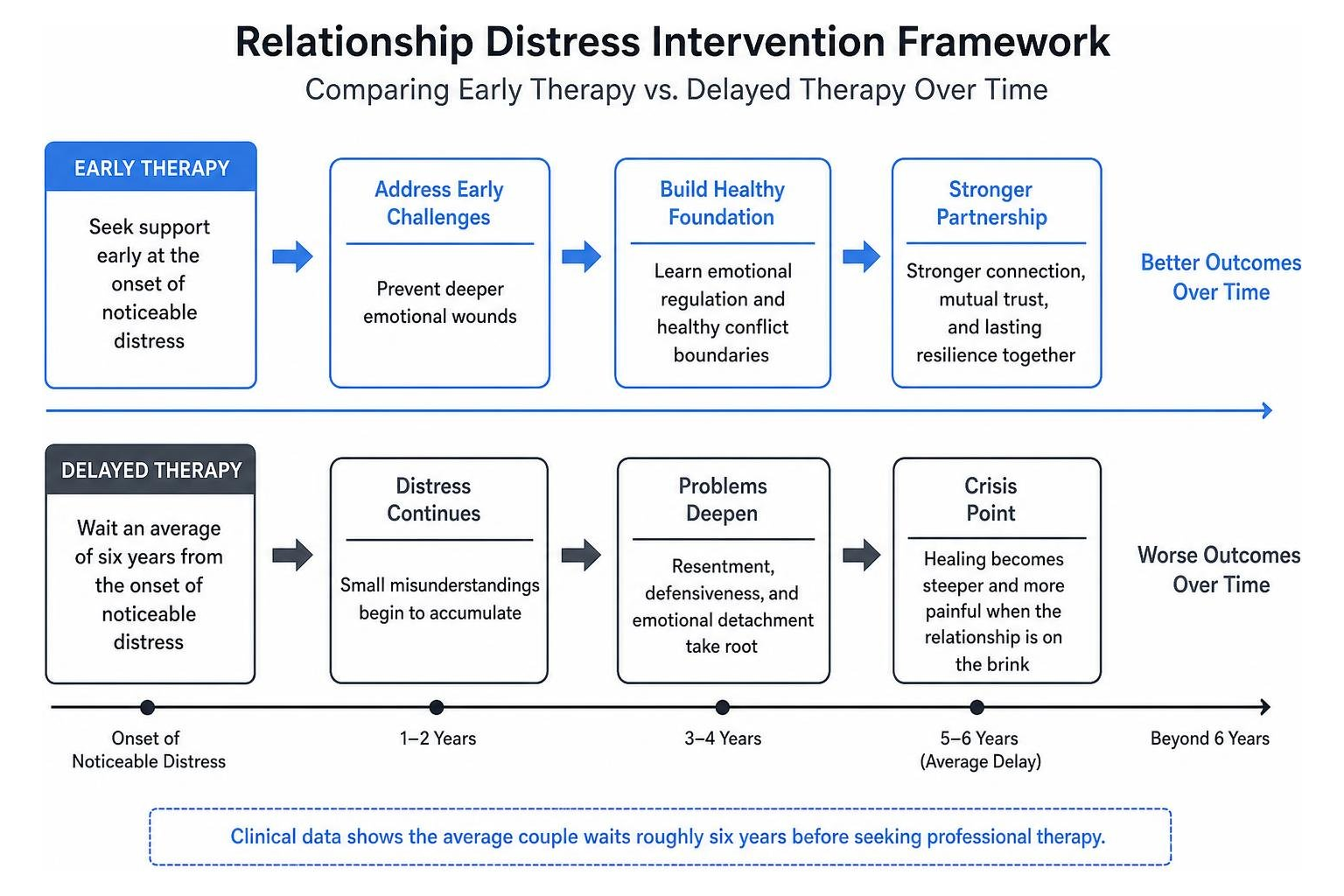
Addressing these friction points early prevents deeper emotional wounds and helps you rebuild a solid foundation of mutual trust and safety.
Moving Past the Six-Year Delay
One of the most concerning trends in relationship health is how long couples wait before asking for help. Research reveals that the average couple waits roughly six years from the onset of noticeable distress before seeking professional therapy.
During those six years, small misunderstandings often calcify into entrenched resentment, defensiveness, and emotional detachment. Waiting until a partnership is on the brink of collapse makes the healing process steeper and more painful than it needs to be.
Seeking support early, whether through routine relationship maintenance or structured pre-marriage counseling, provides couples with practical tools before destructive habits set in. Preventive care allows partners to learn emotional regulation, establish healthy conflict boundaries, and build lasting resilience together.
Evidence-Based Modalities for Relationship Healing
Couples therapy is not simply sitting in a room while an objective third party referees your arguments. Modern relationship counseling relies on clinically validated models designed to uncover the root causes of distress and reshape how you interact.

When selecting a therapeutic approach, it is helpful to look at how different methodologies approach relational healing. Reviewing the clinical evidence behind couples therapy helps clarify why structured, research-backed models deliver consistent results.
| Modality | Primary Focus | Best Suited For | Typical Clinical Goal |
|---|---|---|---|
| Emotionally Focused Therapy (EFT) | Attachment bonds and emotional security | Couples feeling emotionally disconnected, rejected, or stuck in rigid conflict cycles | Identifying negative interaction loops and establishing secure attachment |
| The Gottman Method | Communication patterns, emotional attunement, and shared meaning | Partners struggling with frequent criticism, contempt, defensiveness, or stonewalling | Building the Sound Relationship House and learning actionable conflict management |
| Integrative Behavioral Couples Therapy (IBCT) | Emotional acceptance alongside behavioral modification | Couples with enduring differences who need compromise and mutual understanding | Increasing tolerance for personality differences while modifying harmful behaviors |
Emotionally Focused and Attachment-Based Approaches
Rooted deeply in adult attachment theory, Emotionally Focused Therapy (EFT) views relationship distress through the lens of emotional safety and connection. When we feel disconnected from our partner, our nervous system often perceives it as a threat, triggering fight, flight, or freeze responses.
In a relationship, these responses look like pursuing, criticizing, defending, or withdrawing. One partner might raise their voice because they feel unseen and panic at the thought of abandonment, while the other retreats into silence because they feel overwhelmed and inadequate.
Through attachment-based couples therapy, therapists help couples identify this automatic negative cycle and see it as the true common enemy, rather than seeing each other as adversaries. Research indicates that approximately 70% to 75% of couples move from distress to recovery through EFT, and up to 90% show significant improvements in relationship satisfaction.
The Gottman Method and Behavioral Interventions
Developed through decades of observational research on relationship stability, the Gottman Method focuses on strengthening the emotional framework of a partnership. Central to this approach is the concept of the Sound Relationship House, which emphasizes building love maps, sharing fondness and admiration, turning toward each other’s emotional bids, and creating shared meaning.
The Gottman framework identifies four corrosive communication habits that predict relationship dissolution, often referred to as the Four Horsemen:
- Criticism: Attacking a partner’s character rather than addressing a specific behavior.
- Contempt: Expressing disgust, sarcasm, eye-rolling, or mockery, which actively erodes emotional safety.
- Defensiveness: Making excuses or playing the blameless victim instead of taking accountability.
- Stonewalling: Shutting down and withdrawing from the interaction entirely due to emotional overwhelm.
Therapy replaces these destructive habits with constructive antidotes, such as gentle start-ups, taking personal responsibility, self-soothing, and active listening. Alongside the Gottman Method, behavioral approaches offer practical steps for growth.
Studies show that Integrative Behavioral Couples Therapy (IBCT) helps roughly 69% of couples achieve meaningful improvement, compared to 50% to 60% for traditional behavioral models. At five-year follow-ups, approximately 48% of couples who complete behavioral counseling maintain or improve their relational recovery, demonstrating that learning practical communication skills produces long-term stability.
What to Expect During the Therapy Process
Stepping into counseling can feel intimidating, especially if you are unsure what happens behind closed doors. Knowing the process helps remove anxiety and lets you focus on your growth.

The Initial Assessment and Goal Setting
The counseling journey begins with an initial intake phase. In the first few meetings, your therapist gathers background information regarding your relationship history, family dynamics, cultural background, and current pressure points.
Clinicians often combine joint sessions with brief individual check-ins. These individual conversations give each partner a dedicated space to share their perspective, personal mental health background, and goals without fear of immediate conflict. Standard sessions typically run 50 minutes, though some practices offer extended 75-minute sessions to allow deeper exploration of complex topics.
Together with your provider, you establish a collaborative treatment plan with clear, measurable goals. Rather than dwelling indefinitely on past grievances, the focus centers on learning new relational patterns, improving nervous system regulation during conflict, and tracking emotional progress over time.
Navigating Hesitation in Couples Counseling
It is completely normal for one partner to feel hesitant about beginning therapy. Common worries include fear of being judged, fear of being blamed by the therapist, or skepticism about whether talking to a professional can actually change anything.
If your partner is reluctant, approach the topic with curiosity rather than ultimatums. Frame therapy as an investment in your shared well-being and a space to improve communication, rather than a punishment for past mistakes.
If your partner still refuses to attend, consider starting counseling on your own. Engaging in individual therapy or solo relationship counseling allows you to understand your personal triggers, establish healthy boundaries, and alter your side of the interaction cycle. Because relationships function as interconnected systems, positive shifts in one person often encourage constructive changes across the entire dynamic.
Timeline for Progress and Sustainable Results
The duration of couples counseling depends heavily on your specific goals, the complexity of your challenges, and your commitment to practicing skills outside of sessions. Many couples begin noticing tangible improvements in emotional safety and daily communication within 8 to 12 sessions.
Therapy is structured to move through three distinct phases:
- De-escalation and stabilization: Reducing crisis levels, interrupting harmful cycles, and learning immediate de-escalation tools.
- Restructuring patterns: Deepening vulnerability, processing historical hurts, and establishing new emotional pathways.
- Consolidation and maintenance: Solidifying newly learned behaviors, preparing for future stressors, and fading session frequency.
Regular check-ins ensure that you and your therapist review progress and fine-tune your approach as your connection strengthens.
Healing Specific Challenges: Infidelity, Conflict, and Life Transitions
Couples therapy addresses a wide range of relational challenges, from subtle daily friction to major emotional crises.
Rebuilding Intimacy and Communication Patterns
When emotional safety erodes, both conversational and physical intimacy suffer. Couples frequently fall into defensive communication styles where each partner listens only to formulate a rebuttal. Therapists introduce structured dialogue techniques, such as reflective listening and validation exercises, to help partners truly feel heard.
Rebuilding physical and emotional closeness requires addressing hidden emotional injuries. In many cases, relationship strain is tied to personal well-being. Learning how you can support a partner with mental health struggles helps maintain connection while protecting your own emotional boundaries.
When individual conditions like depression or anxiety heighten relational tension, comprehensive psychiatric care, including evaluation and medication management, can work hand in hand with therapy to restore emotional balance.
Managing the Mental Load and External Stressors
Relational stress often stems from practical everyday burdens. Unequal distribution of household duties, child-rearing tasks, and organizational demands creates persistent friction. Taking proactive steps toward sharing the mental load allows couples to move away from resentment and establish true domestic equity.
External challenges like infertility, financial hurdles, career transitions, and family planning also test a relationship. Therapy offers a calm environment to process grief, balance expectations, and align on joint priorities.
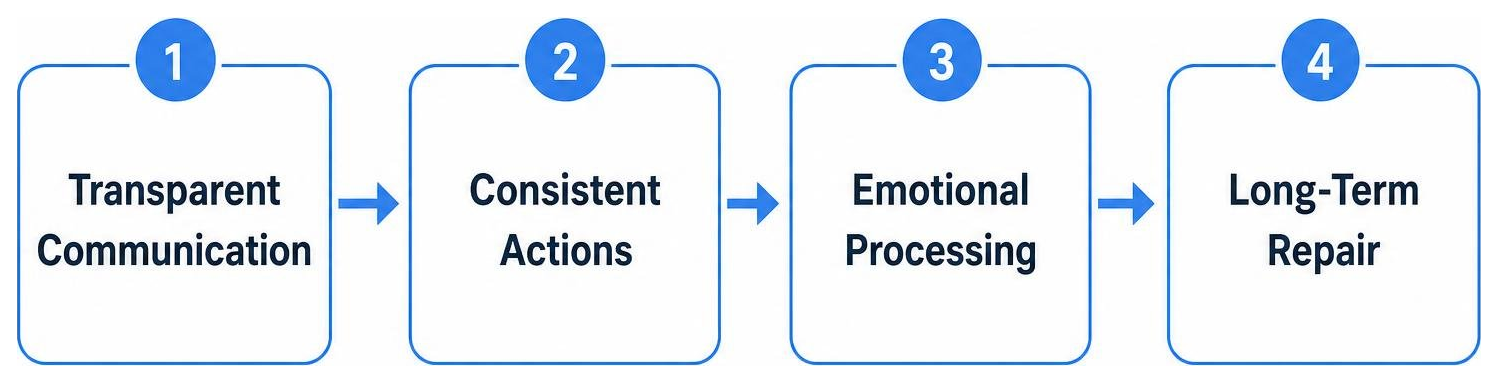
When navigating significant trust betrayals, structured guidance through infidelity-based couples therapy helps partners decide how to move forward, whether through intentional repair or respectful closure.
Navigating Logistics, Insurance, and Affordability
Finding high-quality relationship care involves understanding your logistical and financial options so that therapy remains accessible and sustainable.
In-Person Care vs. Telehealth Accessibility
Modern behavioral health makes accessing care straightforward. While many couples appreciate the focused environment of an in-person clinic, telehealth has proven to be an effective, highly adaptable alternative. Clinical studies confirm that virtual couples counseling delivers clinical outcomes comparable to traditional in-office sessions.
Telehealth allows partners to attend therapy together even if they are in different physical locations, such as separate offices during a lunch break or while traveling. For couples balancing busy careers, childcare logistics, or chronic health conditions across Michigan, including Oakland County, Rochester, Clarkston, and Detroit, virtual care removes travel barriers. Families managing complex schedules can also access virtual family counseling to address broader household dynamics from home.
Evaluating Cost and Insurance Options for Couples Counseling
Investing in your relationship is an investment in your long-term health and family stability. Understanding insurance coverage and session fees ensures you can plan your care without financial surprise.
Reviewing resources that help break down couples counseling costs can assist in planning your care. Many practices operate as out-of-network providers, where clients pay for sessions directly and receive detailed receipts, known as superbills, to submit to PPO insurance plans for potential partial reimbursement. For couples needing flexible financial arrangements, seeking out sliding-scale providers helps reduce out-of-pocket expenses based on household income.
At KindMind Behavioral Health, we believe financial logistics should not stand between you and compassionate mental health support. We accept most major commercial and non-commercial insurance plans, including:
- Aetna
- ASR
- Blue Care Network
- Blue Cross Blue Shield
- Blue Cross Complete
- Cigna
- Cofinity/Varipro
- Health Alliance Plan (HAP)
- Humana
- McLaren
- Medicaid
- Medicare
- Meridian
- Meritain
- Priority Health
- TRICARE East
- UnitedHealthcare/Optum
Before scheduling your initial intake, we encourage you to contact our administrative team to confirm your specific plan benefits, network status, and coverage details for couples and family therapy.
Frequently Asked Questions About Relationship Therapy
How long does therapy typically take to see meaningful improvements?
Every relationship moves at its own pace depending on historical factors, personal commitment, and the depth of conflict. However, most couples who actively participate in evidence-based therapy and complete recommended exercises at home report meaningful improvements in communication and emotional connection within 8 to 12 weekly sessions. More complex situations involving deep-seated trauma or extended breaches of trust may benefit from longer-term support.
Is online therapy just as effective as in-person sessions?
Yes. Robust research across the behavioral health field shows that online couples counseling provides clinical outcomes equivalent to in-person therapy. Telehealth platforms offer a secure, confidential environment where therapists observe body language, coach real-time dialogue, and guide emotional exercises while offering the added benefits of scheduling convenience and reduced commute times.
Can counseling help if we are already considering separation or divorce?
Absolutely. Therapy is not exclusively reserved for couples who are certain they want to remain together. Discernment counseling helps partners who are feeling ambivalent explore their options with clarity, honesty, and professional guidance.
If a couple ultimately decides to separate, therapy provides a constructive setting to navigate that transition amicably, minimize emotional distress, establish cooperative co-parenting agreements, and protect the well-being of any children involved.
Conclusion
Healthy, enduring relationships do not happen by accident; they are built through intentional communication, emotional vulnerability, and a shared willingness to grow. Whether you are navigating recurring daily arguments, recovering from an emotional injury, or simply looking to deepen your connection, professional guidance provides the objective structure and evidence-based tools you need to move forward.
At KindMind Behavioral Health, we offer comprehensive, patient-centered mental health care tailored to your unique relational needs. Our multidisciplinary approach combines compassionate relationship therapy with child, adolescent, and individual counseling, alongside psychiatric evaluations and medication management across Michigan. Whether you prefer in-person appointments at our welcoming offices or the ease of telehealth from anywhere in the state, our dedicated team is here to walk alongside you.
Book an appointment or consultation with KindMind Behavioral Health today to take the first step toward a healthier, more connected relationship. Learn more about our specialized options by visiting KindMind Behavioral Health’s couples and family therapy services.
The information in this article is for educational purposes only and is not intended as medical or mental health advice. Individuals should consult a licensed healthcare professional regarding their specific health needs.